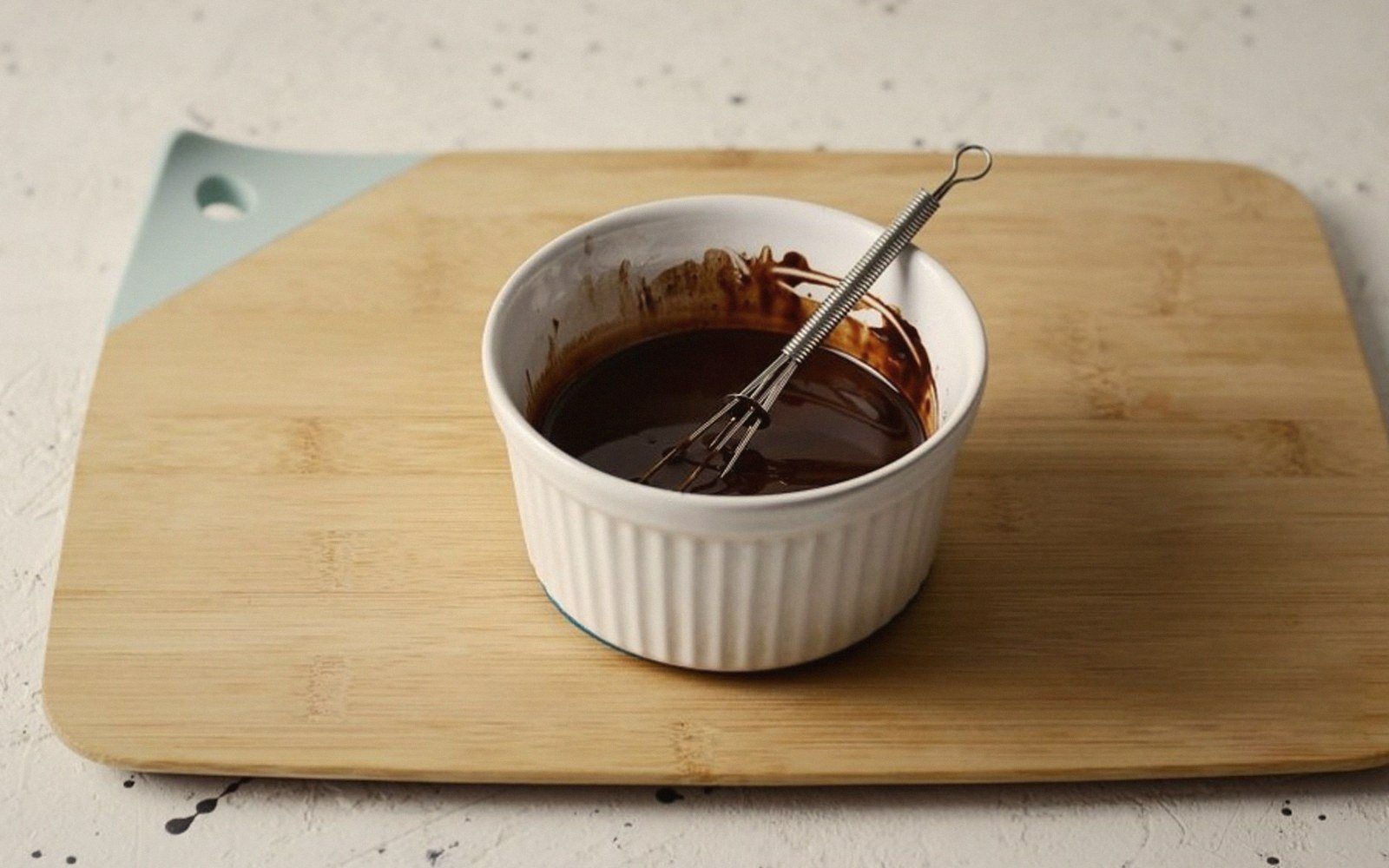
What the liquid actually contains
When chickpeas cook, proteins leach steadily into the surrounding water. Some of these are legumin-class storage proteins — large, globular molecules that at room temperature float in solution without doing much. Alongside them are saponins, amphiphilic molecules with a water-loving head and a fat-loving tail arranged on a rigid steroid-like backbone. The word amphiphilic is the key: each molecule sits at the boundary between water and air rather than dissolving cleanly into either. That dual character is what the foam depends on.
When you whip the liquid, you drive air bubbles through it. At the instant each bubble forms, its surface is an interface between water and air — exactly the kind of boundary saponins are built to occupy. They migrate to that surface, orient themselves with their hydrophobic tails pointing inward toward the air and their hydrophilic heads facing out into the water, and in doing so lower the surface tension. Lower surface tension means it costs less energy to hold a bubble open, which means bubbles are created more easily and resist collapsing.
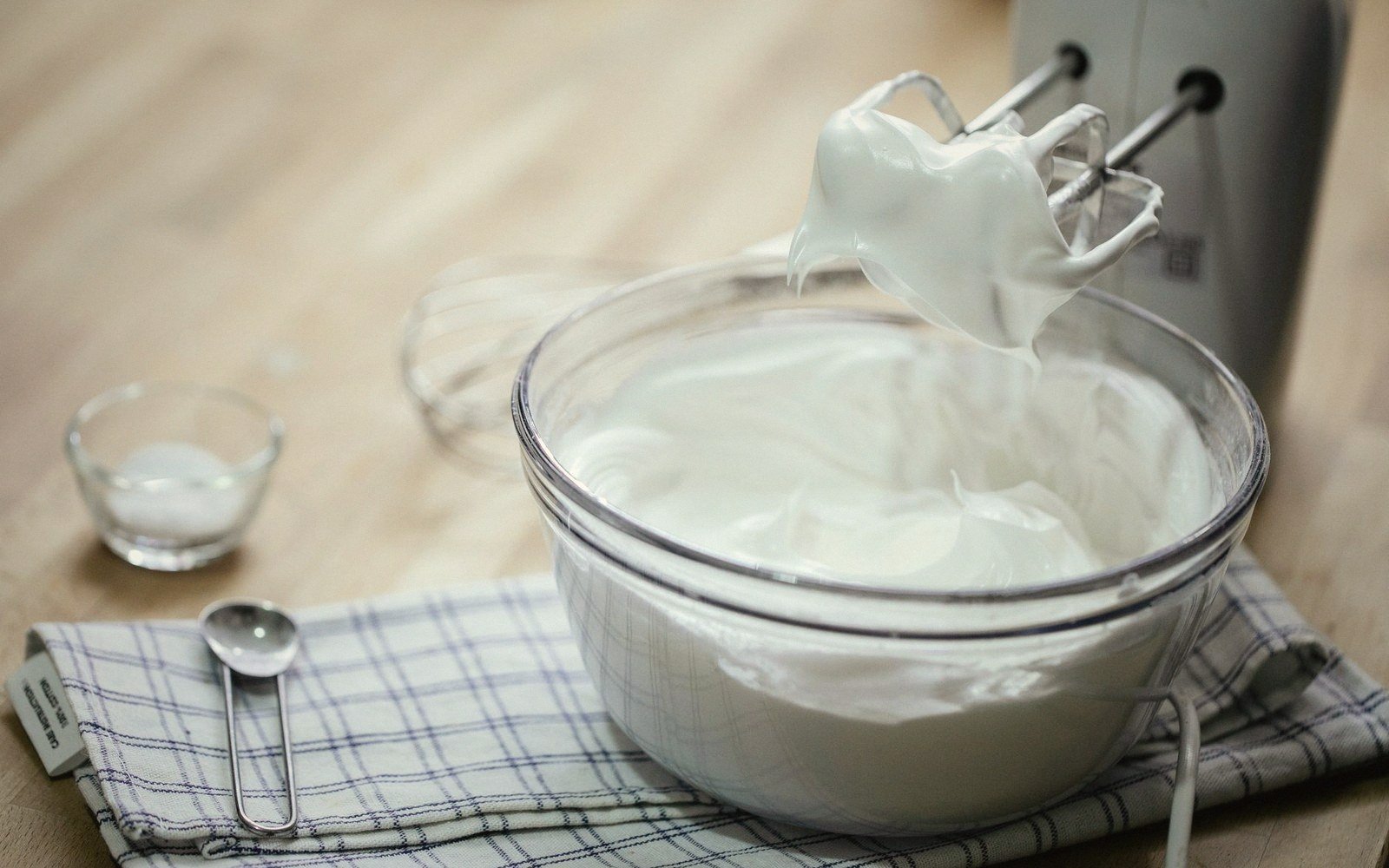
Saponins get the foam started, but they cannot hold it alone. Surface tension reduction makes bubbles cheap; it does nothing to make bubble walls durable. That is where the dissolved proteins take over. As whipping continues, proteins are dragged to the air–water interface and partially unfold — a gentler version of the denaturation that heat causes. These unfolded chains tangle with their neighbours and begin to form a viscoelastic film around each bubble. The film is elastic enough to stretch when the bubble is jostled and viscous enough to resist rupturing. The result is a foam that can support its own weight rather than immediately collapsing into liquid.
Why it behaves like egg white
Egg white foam works on the same two-stage logic: surface-active molecules lower surface tension quickly, then proteins film-form to provide structural durability. In egg white, proteins such as ovalbumin do both jobs, lowering surface tension and then forming the film. In aquafaba, saponins handle the first stage and chickpea proteins handle the second. The parallel is not coincidence — it reflects a shared physical requirement for any stable foam in an aqueous system.
There are differences, and they matter practically. Egg white proteins are more abundant and denature more readily, which is why egg white whips faster and to a stiffer peak. Aquafaba takes longer — typically two to three times the whipping time for a comparable volume — and the resulting foam is slightly less stiff. Its bubble walls are also more permeable, which is why aquafaba foam begins to weep liquid sooner than an equivalent egg white foam and why the cooking applications that suit it tend to be ones where the structure is set quickly, either by heat or by added stabilisers. Baking a foam at a low temperature for a long time works well because the protein film can set before drainage has time to accumulate. A cold dessert that sits for an hour is harder to pull off without help.
The concentration of both saponins and protein in the liquid varies depending on how the chickpeas were cooked and how long the liquid has been reduced. Canned chickpea liquid is generally consistent because industrial cooking is controlled, but home-cooked liquid can be thin enough that the foam barely forms, or — if the water has reduced significantly during a long simmer — dense enough that it whips quickly and holds well. A simple test is to chill a small amount and check whether it gels: lightly set liquid contains enough dissolved material to foam well.
Temperature matters too. Cold liquid whips more slowly but tends to produce a finer, more stable foam. The reason is that surface tension increases slightly as temperature drops, which means more energy goes into each bubble rather than fewer, larger, short-lived ones forming carelessly. Starting with liquid chilled to refrigerator temperature is the single most reliable adjustment a cook can make before understanding what stabilisers contribute to the structure.
Setting Point is an independent publication about food technique and food science. It is not a shop, restaurant, or nutrition service.