The collapse that can't be undone
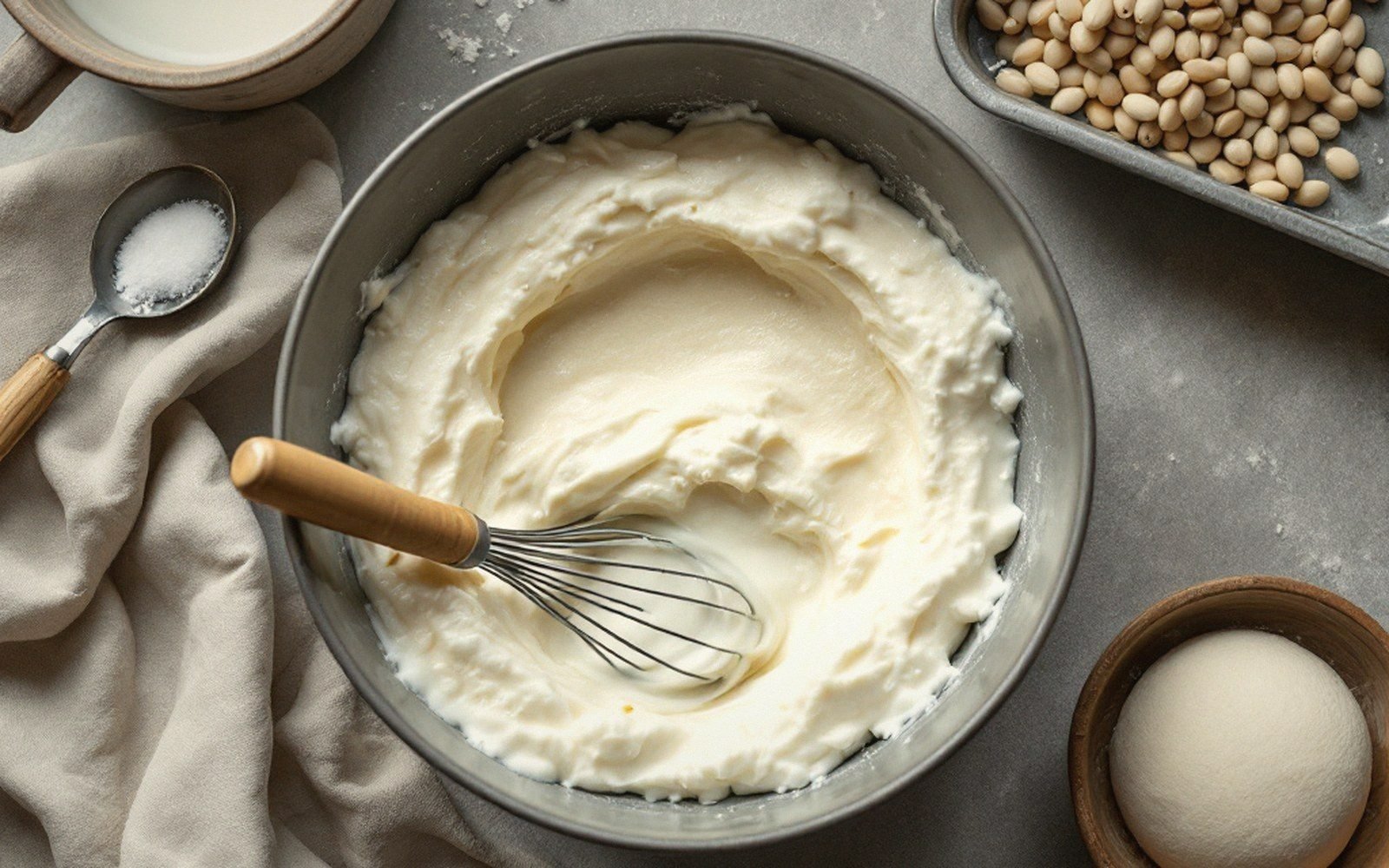
Aquafaba — the liquid from cooked chickpeas — whips into a stable foam because its dissolved proteins unfold at the air-water interface and link together, while saponins act as surfactants to reinforce each bubble wall. For a while, more whipping means more air incorporated, smaller bubbles, and a denser, stiffer structure. Then it doesn't. Then it falls apart.
The mechanism is the same one that breaks any protein foam pushed too far. As whipping continues beyond the structural optimum, the protein network at the bubble walls is stretched and compressed repeatedly until the films between bubbles rupture. Air cells coalesce into larger pockets and begin to expel liquid. What you see is a foam that looks curdled — coarse, wet, grainy — with free liquid pooling at the base. Unlike a slightly under-whipped foam, which can be rescued with more whipping, an over-whipped foam cannot be repaired. The proteins have cross-linked and aggregated irreversibly; beating again just breaks what structure remains.
The transition happens fast, and it is temperature-dependent. A cold bowl and cold liquid slow protein unfolding slightly, giving a wider working window. A warm environment accelerates it, and the peak arrives and passes in seconds. Whether the window is wide or narrow, once the peak has passed, the failure is final.
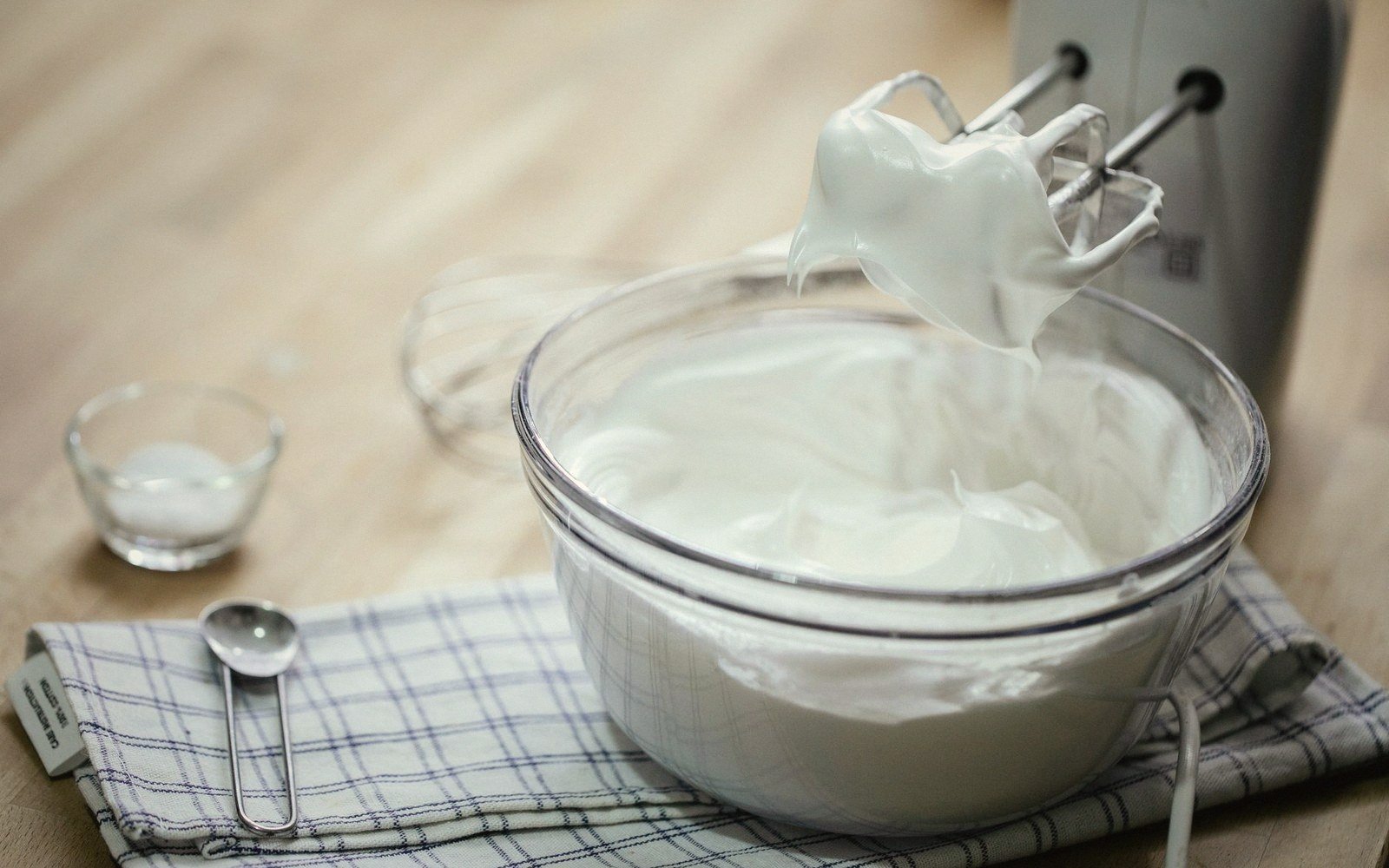
Two variables most often push a batch over the edge: running the mixer unattended at high speed, and adding sugar too late. Stabilising with sugar at the right moment raises the viscosity of the aqueous phase and braces the bubble walls, extending the window before collapse. Without that intervention, or with it added to foam that is already over-stiff, the margin disappears quickly. A thick, glossy foam that holds a clean peak when the whisk is lifted is already near the limit — at that point, stop.
Recovery is not possible. A broken foam can be returned to liquid by stirring, but it will not re-whip into a useful structure. Start again with fresh aquafaba, a clean bowl, and a timer.
Setting Point is an independent publication about food technique — not a shop, restaurant or nutrition service.