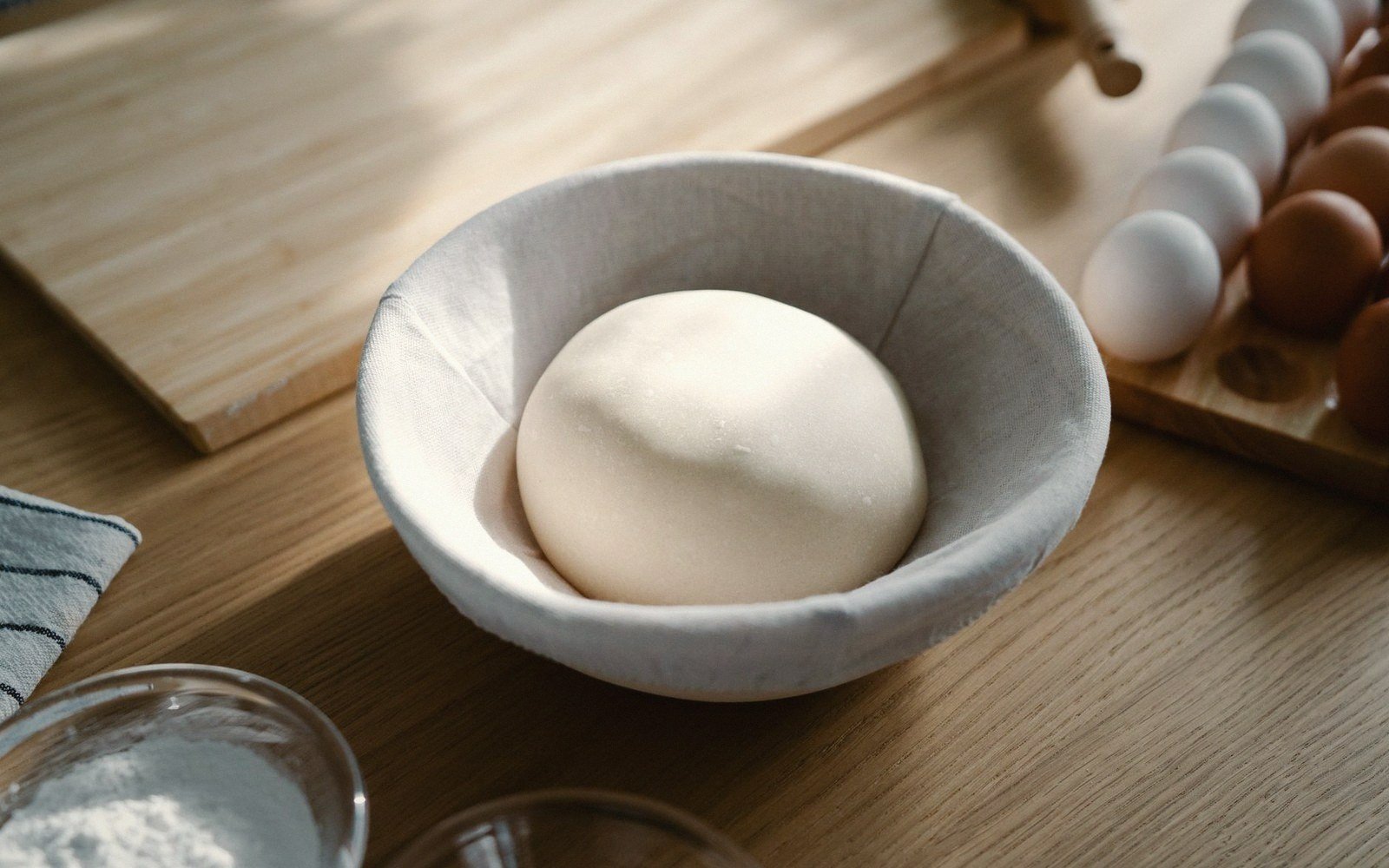
The spring that needs to uncoil
Gluten development builds a tight, cross-linked network — exactly what you want for structure, and exactly what makes the dough elastic enough to snap back every time you try to roll it flat. The proteins responsible, glutenin in particular, are long polymer chains that coil and tangle as you work them. Kneading aligns and bonds them; it also puts them under tension. Stop kneading and the bonds persist, but the tension stays too. Try to shape immediately and the dough will shrink back toward its resting length with every pass of a rolling pin.
The fix is to leave it alone. Given ten to thirty minutes, the gluten network undergoes stress relaxation — a term borrowed from polymer physics that means exactly what it sounds like. The chains redistribute the internal load, slipping fractionally against one another until the whole network settles into a lower-energy configuration. The dough does not become structurally weaker; it becomes more compliant. Extensibility increases while elasticity falls, at least temporarily. A round of dough that fought you can now be stretched to a thin sheet without tearing or contracting.
Temperature matters here. A warm rest — dough left on the bench, loosely covered — accelerates relaxation because higher temperature increases molecular mobility. A cold rest, in the refrigerator, slows the process but does not stop it; given enough time, even cold dough relaxes fully. Cold also slows any enzymatic activity in wheat flour, particularly protease action, which can over-relax the network if given hours rather than minutes at room temperature. For short rests of under thirty minutes, bench temperature is fine. For anything longer, refrigerate.
Hydration level shifts the outcome too. A wetter dough relaxes faster because water acts as a plasticiser, lubricating the protein chains and reducing friction between them. A stiff dough — the kind used for extruded pasta — needs a longer rest than a soft flatbread dough at the same temperature, all else being equal. If a dough still springs back after the expected rest time, more time is almost always the answer; adding water changes the texture of the finished product, and adding nothing costs nothing.
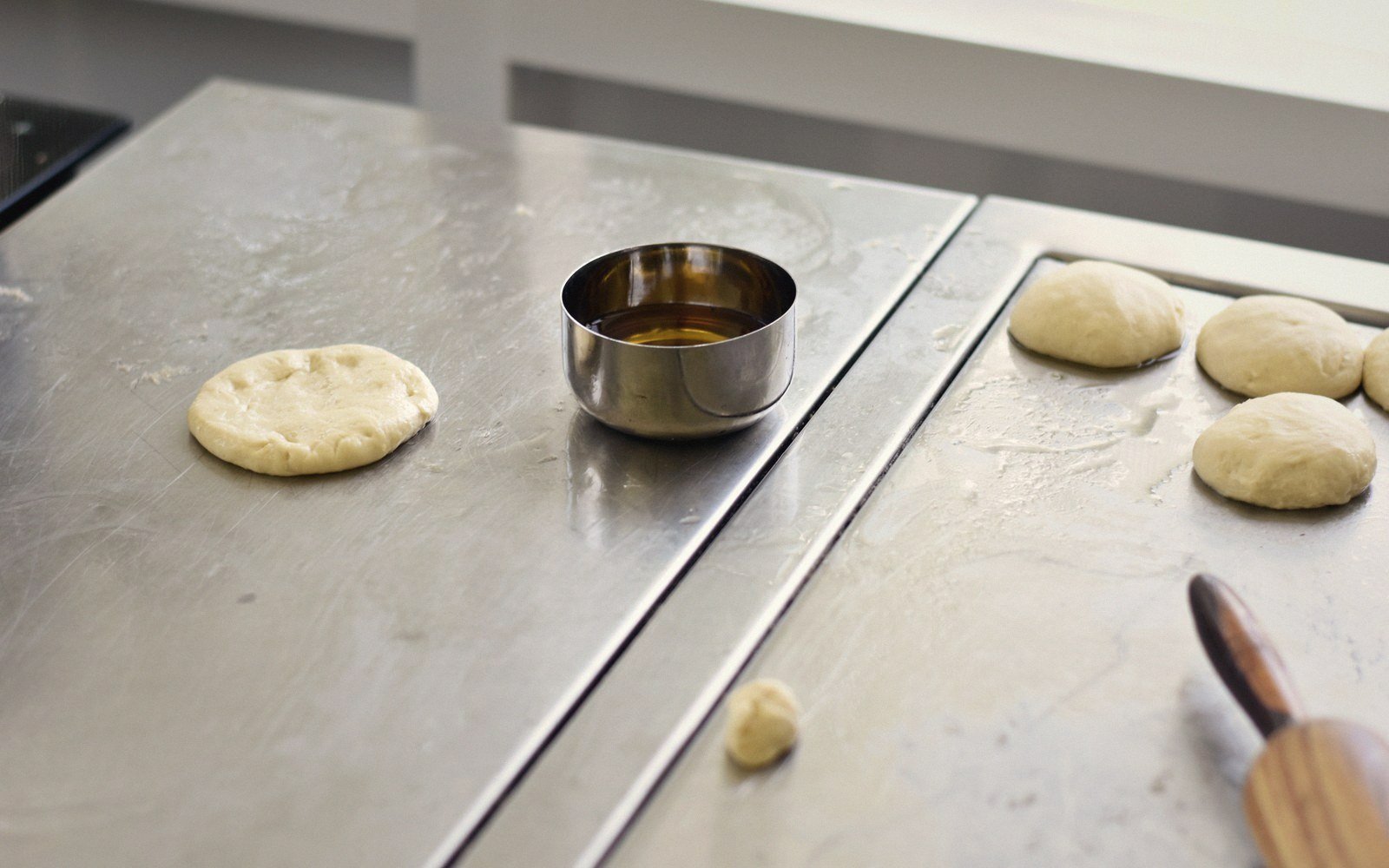
Cover the dough during the rest. An exposed surface dries rapidly, forming a skin that will not reintegrate when you roll and fold; that skin tears rather than stretches. A lightly oiled bowl, a damp cloth, or pressed-contact cling film all work. The method matters less than maintaining an even surface moisture.
Resting is not a pause in the process. It is a step with a mechanism, a window, and a failure mode — and understanding it makes the dough behave.
Setting Point is an independent guide to plant-protein technique — not a shop, restaurant, or nutrition service.