The water does two jobs, and one of them you can ruin
When you cook a gluten mass in water, the liquid serves as the heat-transfer medium that firms the network and, simultaneously, as the environment the texture has to survive. Get the temperature wrong — specifically, get the agitation wrong — and the texture suffers in a way that no downstream step can fix.
The mechanism is straightforward. Gluten is a viscoelastic protein network, elastic enough to stretch and viscous enough to hold shape. When it goes into hot water, the proteins denature further, cross-links tighten, and the mass firms into something cohesive and chewy. That much happens at any temperature above roughly 70 °C. What varies is what the moving water does to the surface and interior of the piece while that setting happens.
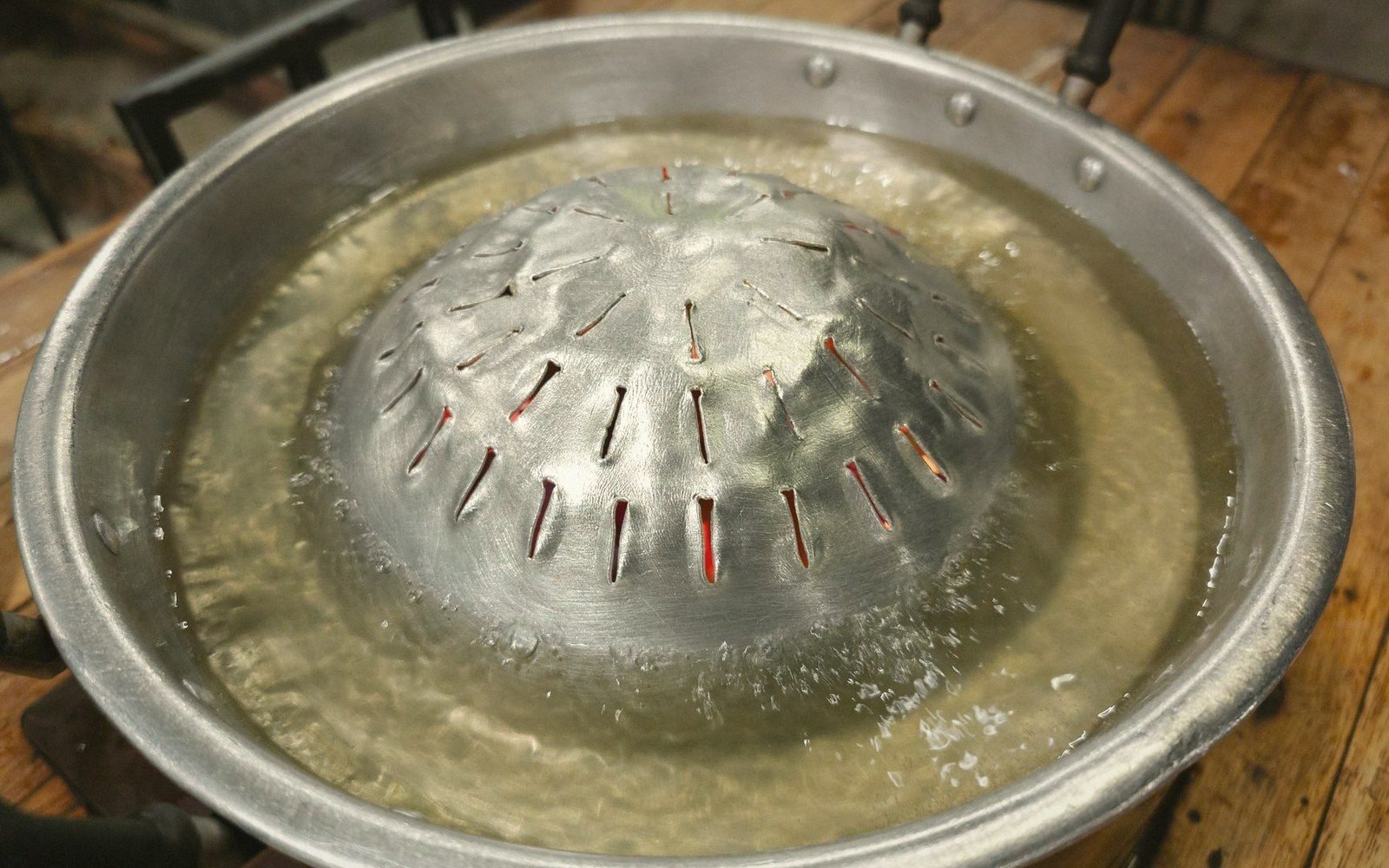
A rolling boil is energetic. Bubbles shear the outer layers of the gluten mass, water rushes in where the pressure momentarily drops, and steam pockets form inside. The result is a spongy, open texture — full of voids where the boiling water punched through — rather than a dense, even one. The network sets around those voids and holds them. Once fixed, they do not close.
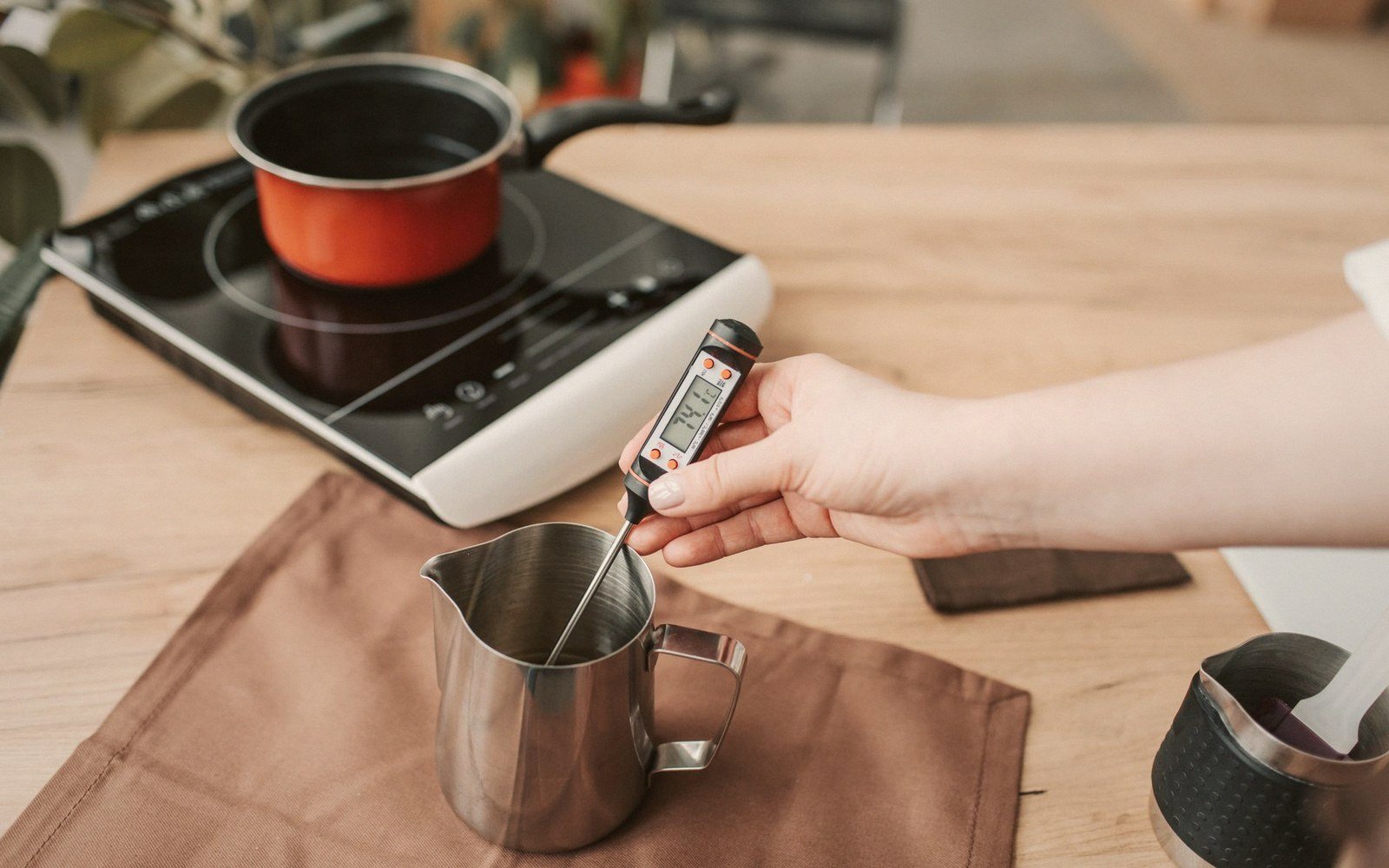
A bare simmer — surface movement, occasional lazy bubble, water in the range of 82–90 °C — transfers heat efficiently enough to cook the piece through without the mechanical disruption. The network firms evenly from the outside in, cross-links form in an orderly way, and the finished texture is dense, yielding, and consistent throughout.
The distinction matters most in the early minutes, when the outer layer is still soft enough to be physically deformed. Once a firm crust of set protein has formed around the mass, it resists further mechanical damage from the water. That crust forms faster than intuition suggests — often within two or three minutes of submersion — so the practical rule is: start gentle and stay gentle, because the first few minutes of a rolling boil are the ones that do the damage.
Piece size matters too. A larger mass takes longer to cook through and therefore spends more time in the vulnerable, partially-set state. Smaller pieces, set faster, are relatively more tolerant of a brief temperature spike. But smaller pieces also have proportionally more surface area, so the sponging effect at the edges, if it happens at all, represents a larger fraction of the total volume.
The control is simple: keep the water moving but not violent, and the texture looks after itself.