What you are actually washing away
Wheat flour is roughly two-thirds starch by dry weight, most of it packed into granules between 2 and 40 micrometres across. Those granules are held in a matrix along with two proteins — glutenin and gliadin — that, once hydrated and worked, link together into the tangled, disulphide-bonded network we call gluten. The crucial difference between the two components is structural: starch granules are discrete, relatively smooth particles with no strong bonds to their neighbours. Gluten, by contrast, is a continuous, elastic web. Water can dislodge loose particles; it cannot pull apart a covalent network.
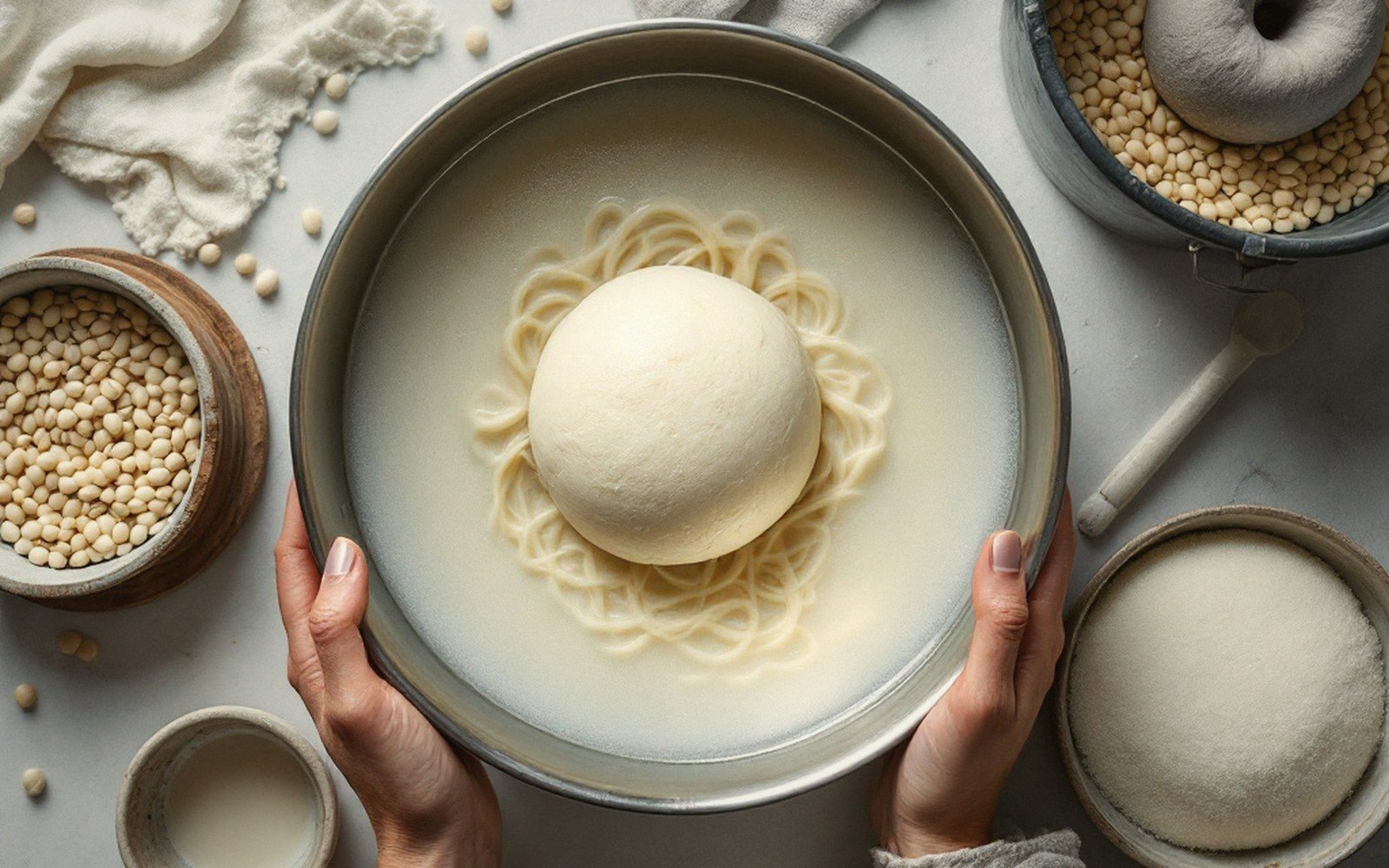
When you knead flour and water, hydration lets the proteins find each other and form that network while the starch granules simply sit embedded in it. Then you submerge the dough and knead again — gently, so you do not tear the gluten — and the water carries the starch granules away in suspension. The liquid turns white almost immediately: that is amylose and amylopectin dispersing into the water, the same thing that happens when you rinse raw rice. You repeat the process, changing the water or working under a running tap, until the liquid runs nearly clear. What remains is a wet, slightly grey, intensely elastic lump — raw gluten, or seitan (the Japanese term most widely used in English-language cooking).
The variables that change the outcome
Three things govern how cleanly the starch washes out, and how much gluten you recover.
Flour choice. High-protein bread flour — typically 12–14 percent protein — yields a stronger network and more gluten by weight. Lower-protein all-purpose flour produces a softer, more fragile web that is easier to tear during washing and harder to work with once isolated. The starch content is similar either way; the gluten content is not. Vital wheat gluten exists as a shortcut — it is flour that has already been through this industrial washing and drying process — but starting from whole flour gives you a more cohesive, chewier result because some of the starch that remains trapped in the network after washing acts as a plasticiser.
Resting before washing. The initial rest after mixing — covered, at room temperature, for at least thirty minutes — is not optional. Resting lets the protein network relax and fully hydrate, so it holds together under the mechanical stress of washing. Dough that goes straight into the water tends to break apart, releasing gluten fragments with the starch and lowering your yield.
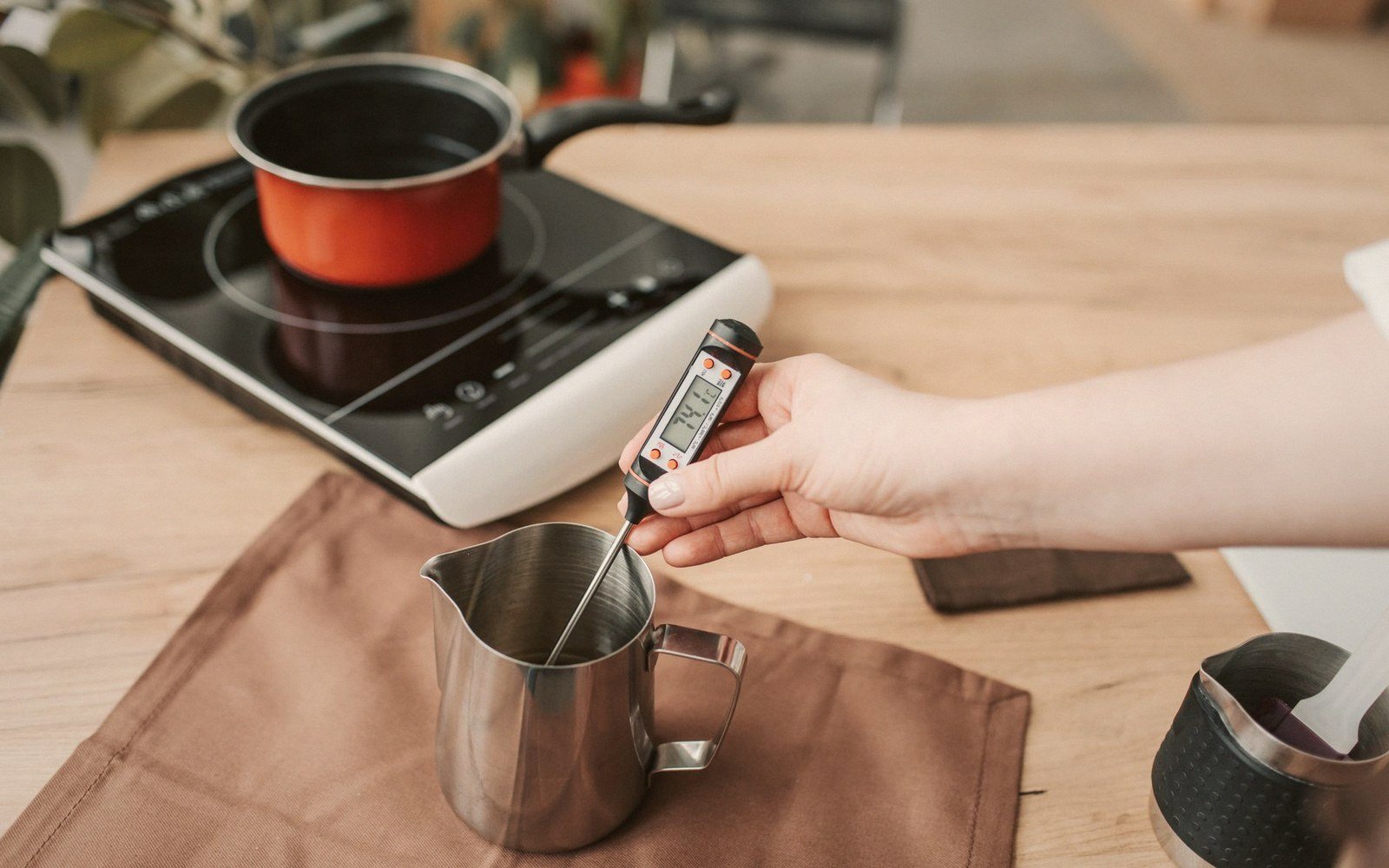
Water temperature. Cold water is correct. Hot water begins to gelatinise the starch granules, making them swell, burst, and become sticky — the opposite of what you want. Gelatinised starch clings to the gluten network rather than washing free, and the finished mass becomes dense and gummy. Keep the wash water cool, or even chilled, and the granules stay intact and mobile.
The end point is easy to read: squeeze a handful of the mass over a bowl and watch the water that runs out. Milky white means starch is still leaving. A faintly opalescent, almost clear stream means you are close. Truly colourless means you are done — or very nearly, because complete starch removal would take impractically long, and a small residue is harmless and, arguably, desirable for texture.
After the wash
What you have at this point is structurally finished but culinarily raw. The gluten network is set only by its own cross-links, not by heat, so the mass is extensible and rubbery. It must be cooked — typically simmered — before it holds a shape worth eating. Simmer, not boil applies here directly: hard boiling opens the network into a spongy, porous texture, while gentle heat sets it with a tighter, more satisfying chew. Everything else — seasoning, flavour — goes into the cooking liquid around the mass, because the gluten itself is functionally bland.
Setting Point is an independent publication about food technique. It is not a shop, restaurant or nutrition service.