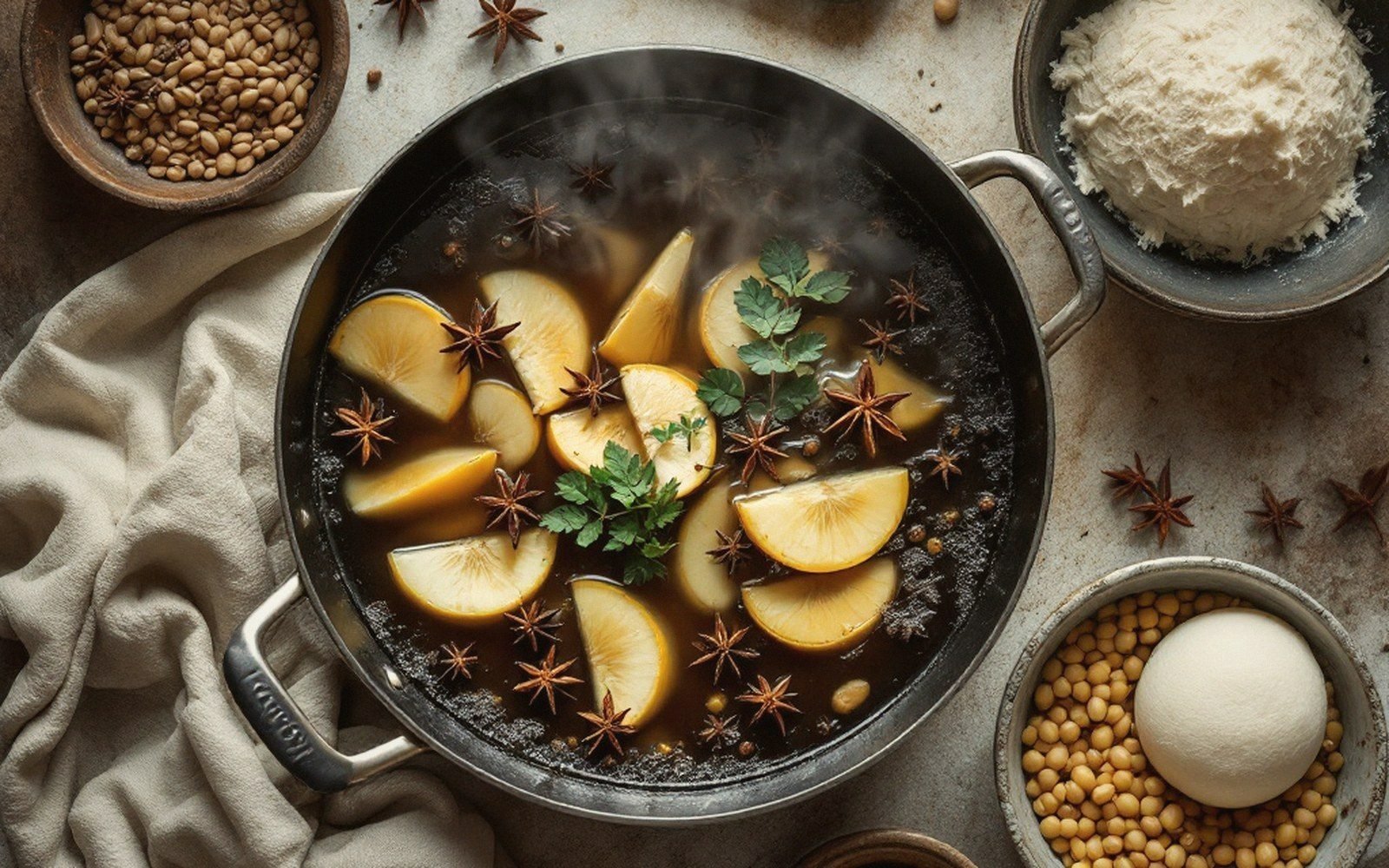
Flavour is structural, not sprinkled
Wash a wheat dough long enough and you are left with raw gluten: an elastic, nearly white mass that tastes of almost nothing. The washing has done exactly what it was supposed to do — stripped out the starch, the sugars, the water-soluble flavour compounds — and what remains is largely protein. That blankness is not a flaw. It is the starting condition from which every technique that follows is built.
The problem is that gluten's porosity cuts both ways. The same network of cross-linked proteins that holds its shape through a long simmer is also full of small chambers and channels. Raw gluten can absorb liquid readily when you knead extra water in, but once it has been cooked those chambers are essentially fixed. The protein has set; diffusion into the interior becomes much slower than diffusion along the surface. This is why seasoning the finished mass directly — rubbing salt into cooked seitan, dusting it with spice — produces food that tastes well-seasoned on the outside and bland at the centre.
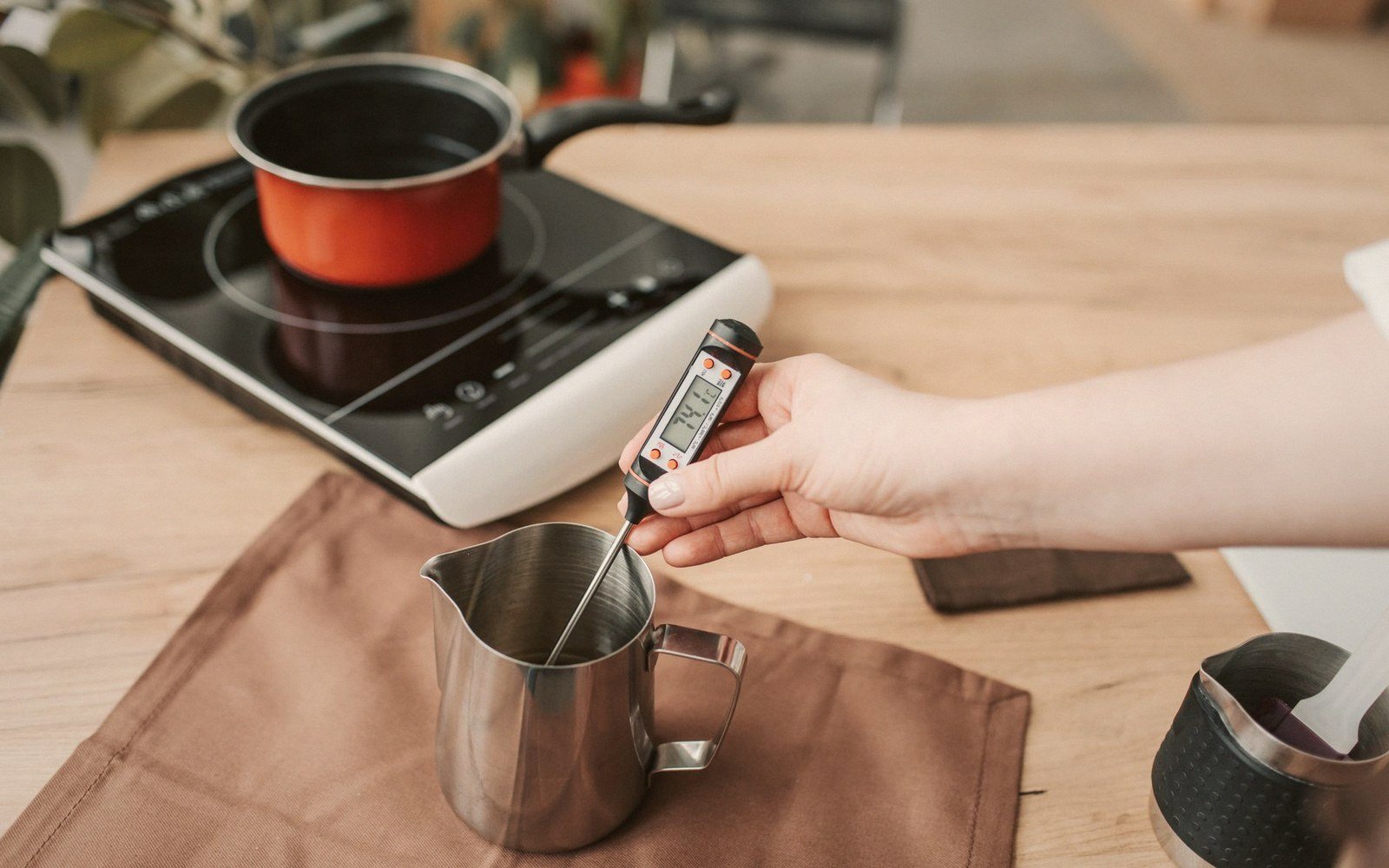
The solution is to cook it in flavour. Liquid surrounds the gluten on all sides simultaneously, penetrating from every face at once rather than waiting to work inward from one surface. A long simmer, not a boil, in well-seasoned stock gives diffusion time to do its work. The cook controls depth of flavour by adjusting concentration and time, not by increasing temperature — which would toughen the texture before the interior absorbs anything useful.
What goes in the liquid matters as much as how long. Salt is the baseline: it drives seasoning inward by osmotic pressure as much as diffusion. Soy sauce adds salt alongside glutamates that deepen the savoury character throughout the piece. Aromatics — ginger, garlic, dried chilli, kombu — disperse their flavour compounds into the simmering liquid, from which the gluten draws them continuously. Fat-soluble compounds travel more slowly through an aqueous cooking medium, which is why aromatics benefit from a brief bloom in oil before the liquid is added; you are not just releasing flavour, you are converting it to a form the water can carry.
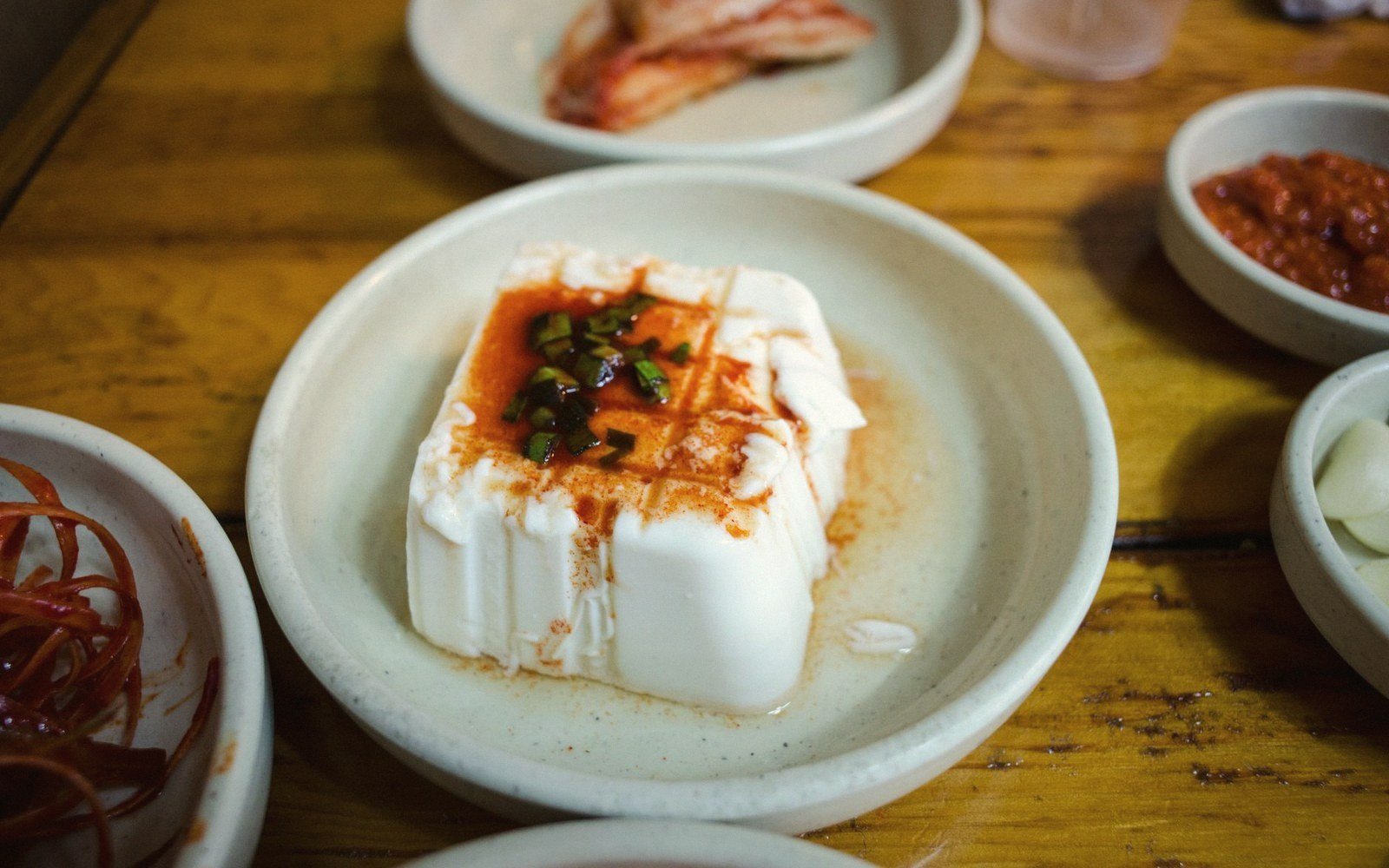
One practical consequence: don't rush the rest in the liquid. Gluten pulled from the pot and allowed to sit in its cooking broth as it cools will carry noticeably more flavour than gluten drained immediately. The drop in temperature slows cooking but does not stop diffusion; the mass continues drawing in seasoned liquid for as long as it is submerged.
The protein is the structure. The liquid is the seasoning. Treating them as separate variables — and controlling each on its own terms — is what turns a bland elastic mass into something that tastes like food.