The band and what happens outside it
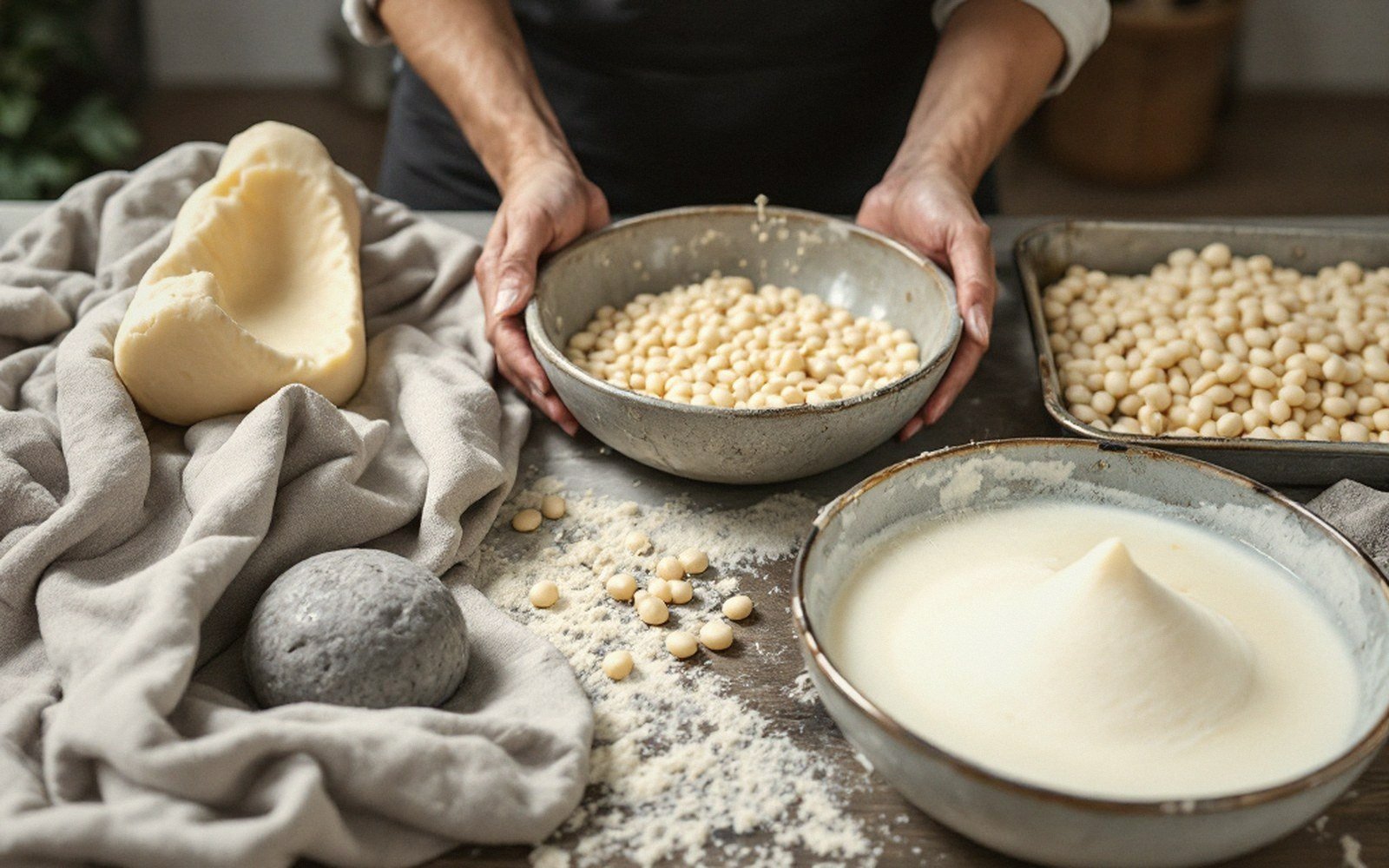
Soy milk coagulates because heat has already changed the protein. During cooking, the globulins — mainly glycinin and β-conglycinin — unfold and expose reactive sites they normally keep tucked inward. A coagulant ion, magnesium or calcium, bridges those sites across neighbouring molecules and pulls them into a continuous gel. The catch is that this mechanism is temperature-sensitive twice over: once during the cooking that creates the reactive sites, and again at the moment the coagulant meets the liquid.
Add your coagulant below roughly 75 °C and the proteins, though already denatured, are moving too slowly for the bridges to form reliably. The ions disperse into the liquid before the molecules have time to find each other. You get a thin, wispy curd — if you get one at all — and the whey runs cloudy because unbound protein is still suspended in it. The set is either absent or so fragile it breaks the moment you try to ladle it.
Push above 90 °C and the problem reverses. Bridging happens almost instantly, faster than the proteins can orient themselves into an orderly network. The result is a coarse, contracted mass: small, tight curds surrounded by clear whey, rather than the cohesive gel you are after. Calcium sulphate, which reacts slowly at any temperature, resists this tendency better than magnesium chloride does; nigari at a rolling boil will seize in seconds and cannot be corrected.
The working window sits between roughly 75 °C and 90 °C. Within it, ions diffuse at a pace the protein network can accommodate. The gel forms evenly, traps water in small, consistent pockets, and has enough cohesion to press without fracturing. Fifteen degrees sounds generous until you are working from a domestic hob, where the liquid in a pot can drop twenty degrees in two minutes once it is off the heat. Timing matters.
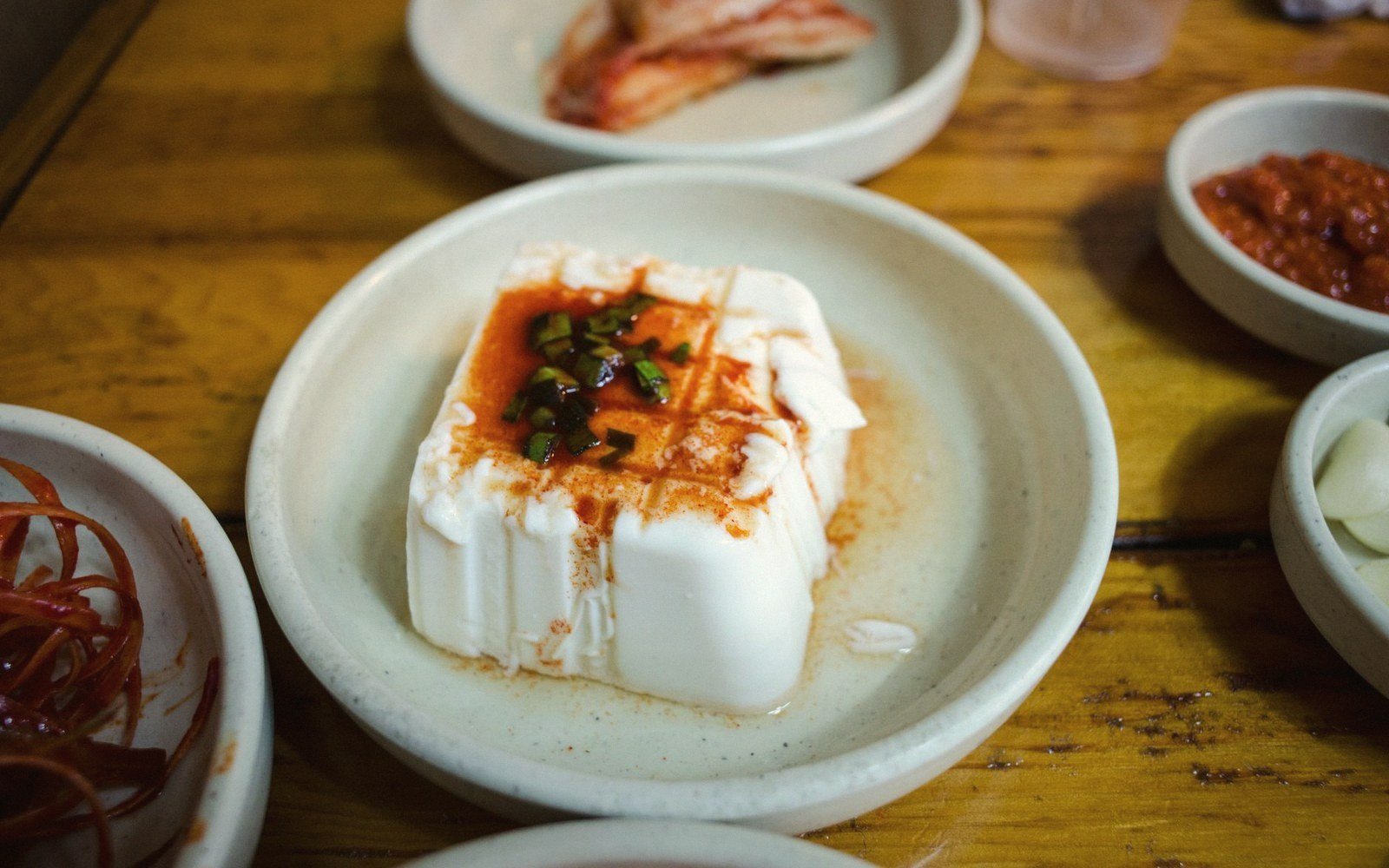
Experienced makers check temperature immediately before adding the coagulant, not at the moment they take the pot off the heat. The liquid loses degrees quickly, and the surface cools faster than the interior. Gentle stirring just before adding — one or two slow passes — equalises the gradient without introducing bubbles that would disrupt the set. After the coagulant goes in, the liquid is disturbed once, briefly, and then left completely still. Movement at that point physically shears the gel as it forms, producing the same coarse result as overheating: the network is disrupted before it can hold together.
The window, in other words, is about giving the chemistry time to be orderly.