How weight and time shape the final texture
Once coagulation is complete — the proteins have aggregated, the whey has separated — the curd is still fragile and wet. Pressing is the step that decides whether the finished block crumbles at a touch, slices cleanly, or bounces back like rubber. Those three outcomes are not about coagulant choice or soy concentration alone; they are almost entirely about how much water you remove, and how quickly.
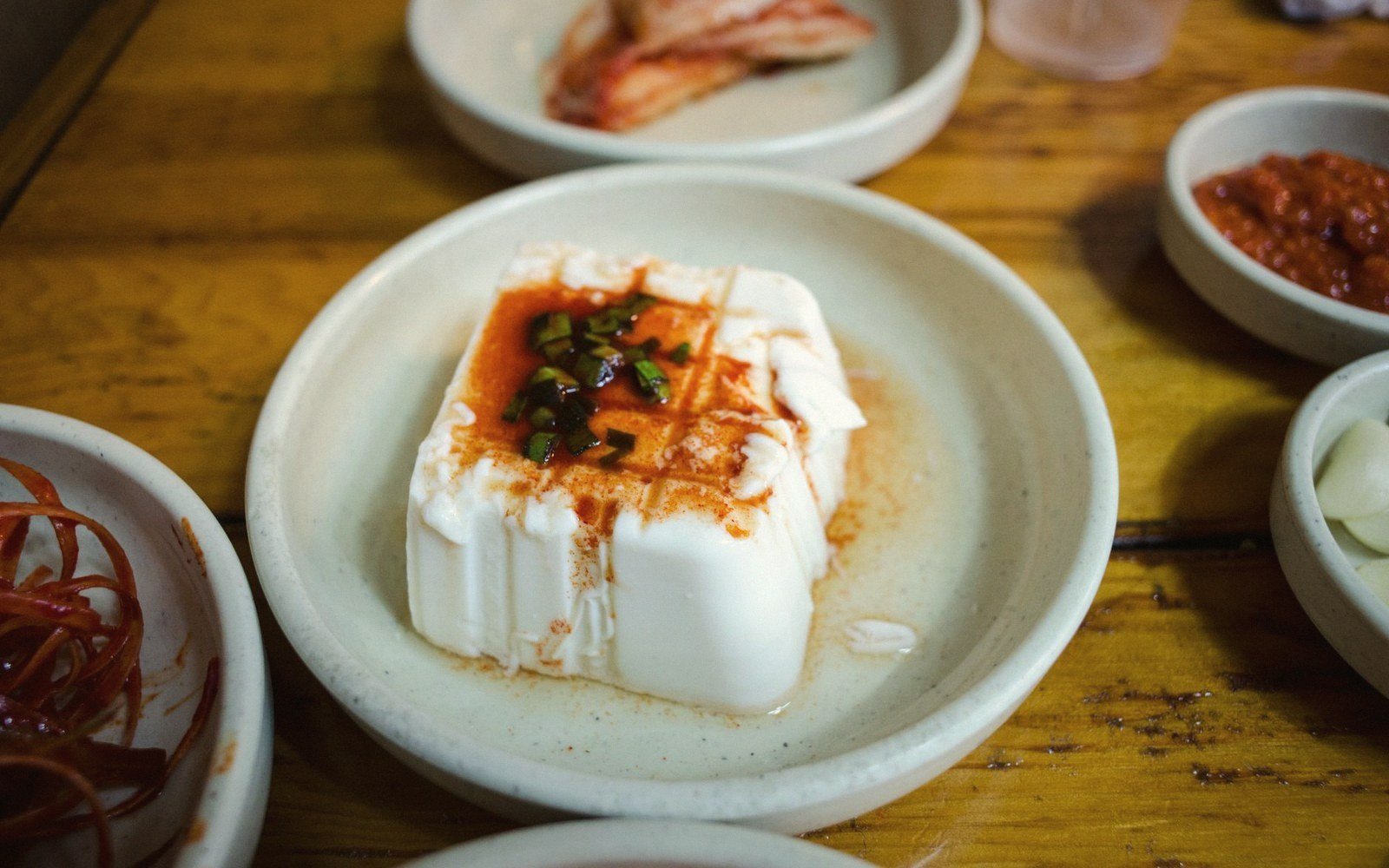
The mechanism is straightforward: weight bears down on the protein network, collapsing the spaces between aggregated particles and forcing whey out through a perforated mould or cloth. The network densifies. As water content falls, protein-to-protein contacts multiply, and the block grows firmer. Remove very little water and you get a soft, custard-like result — the style sold as silken, at the softest extreme of firmness. Remove most of it and the block becomes dense enough to slice thin, marinate deep, or sear without falling apart.
Two variables control the outcome: the mass of the weight applied, and the duration it sits. They are not interchangeable. A heavy weight for a short time collapses structure unevenly — the outer layers compress before the inner whey has time to migrate. A lighter weight held longer allows the whey to travel gradually through the network, producing even density throughout. This is why the old practice of pressing overnight under modest weight — rather than stacking heavy pans for twenty minutes — yields a more uniform texture. Time, within reason, does the finer work that mass cannot.
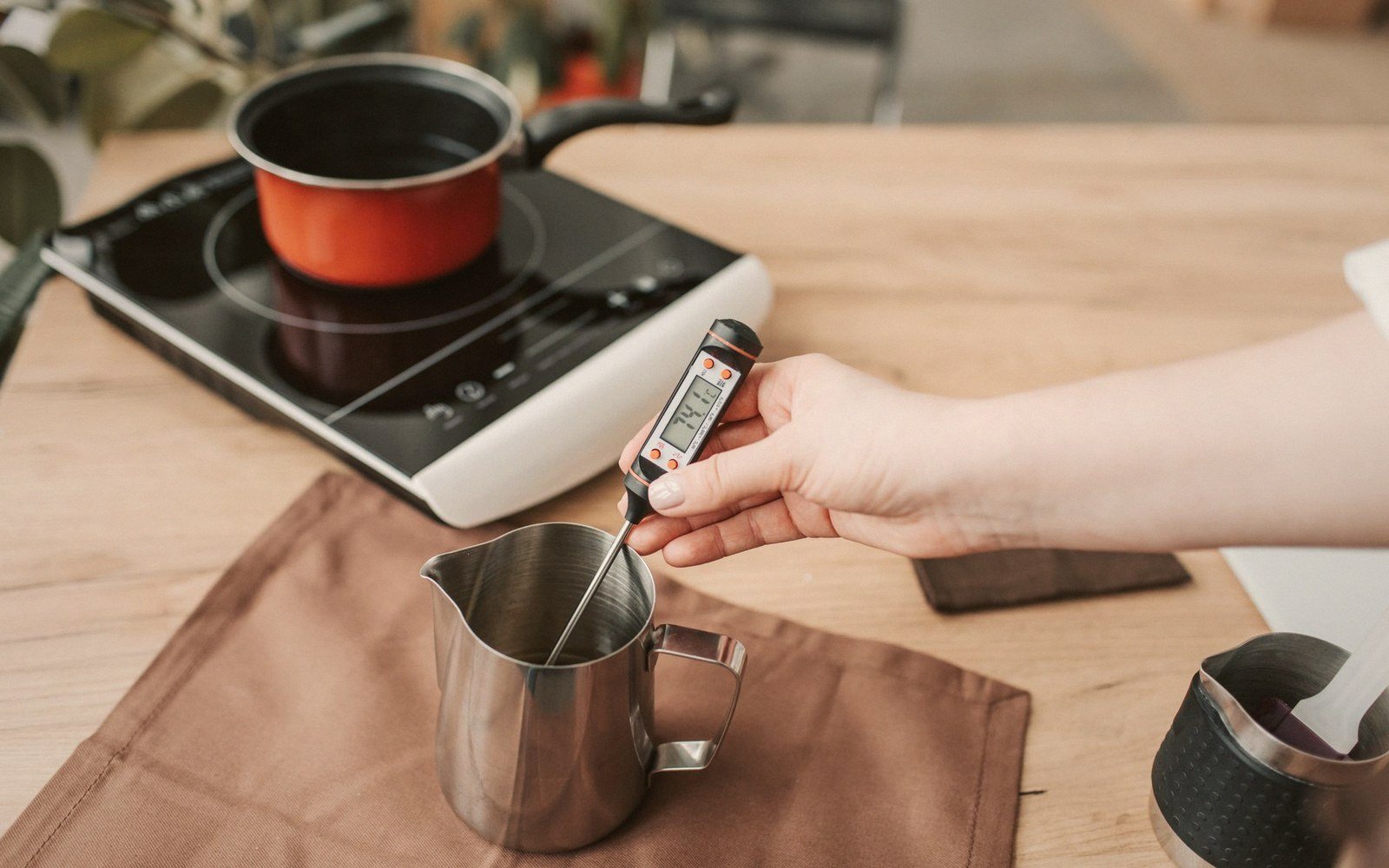
Temperature matters too, though it is rarely called a pressing variable. Warmer curd is more plastic; the protein network deforms under pressure without fracturing. Cold curd pressed hard tends to crack at the surface because the network has stiffened before consolidation is complete. Pressing at or just below the coagulation temperature — warm but no longer hot — gives the structure enough flexibility to compact without splitting.
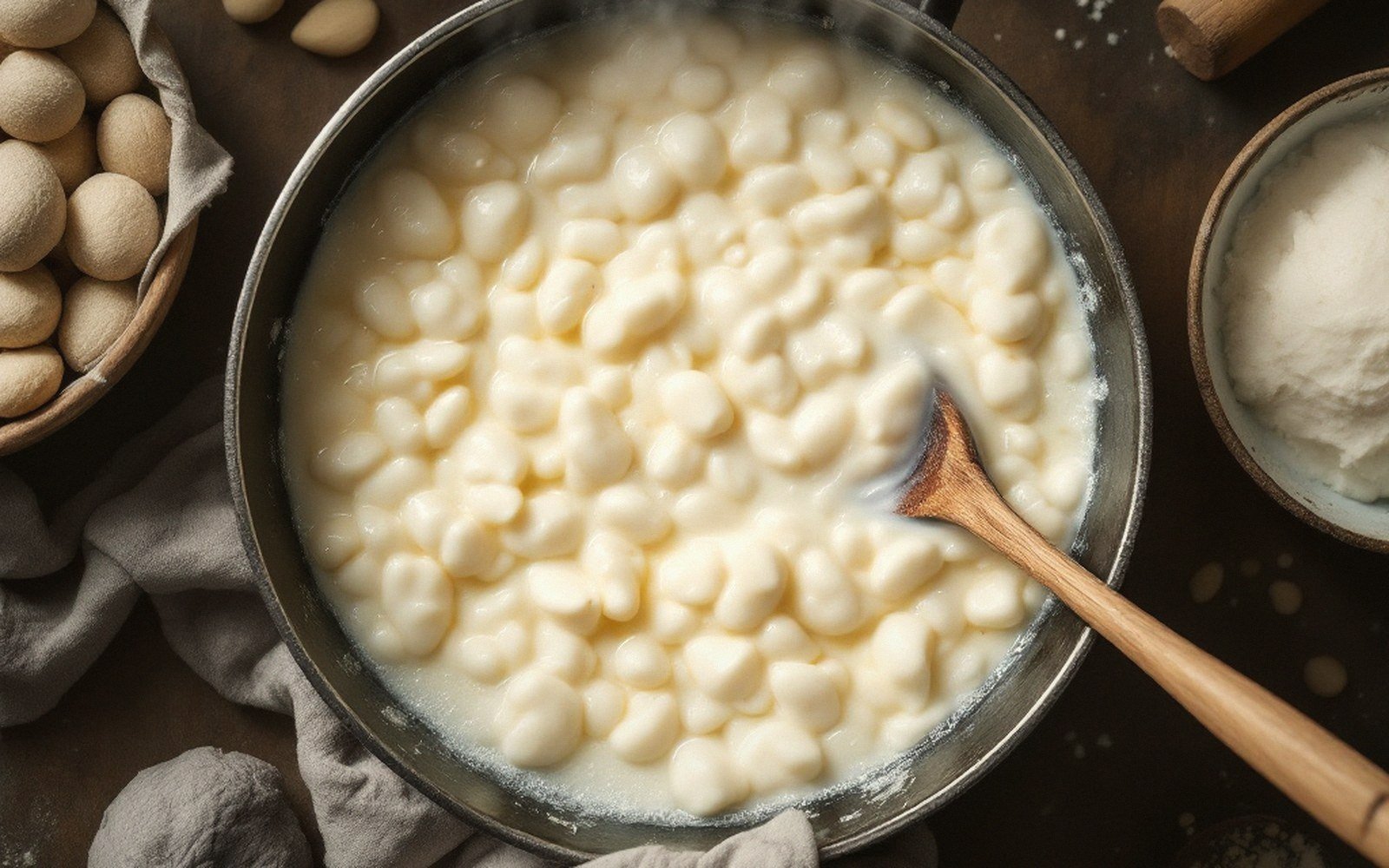
The cloth is not incidental. A fine-weave muslin slows drainage and produces a smoother exterior; a coarser cloth drains faster and can leave a textured surface. Either is usable, but the choice affects timing: finer cloth needs longer under the same weight to reach the same water content.
A useful benchmark is touch: a fully pressed block at medium firmness should give slightly under thumb pressure but spring back without leaving an impression. If the indentation stays, the curd is still too wet to hold its structure once cut.
Every subsequent step — marinating, frying, fermenting — is easier when the water content is already where you need it.