The fork in the road
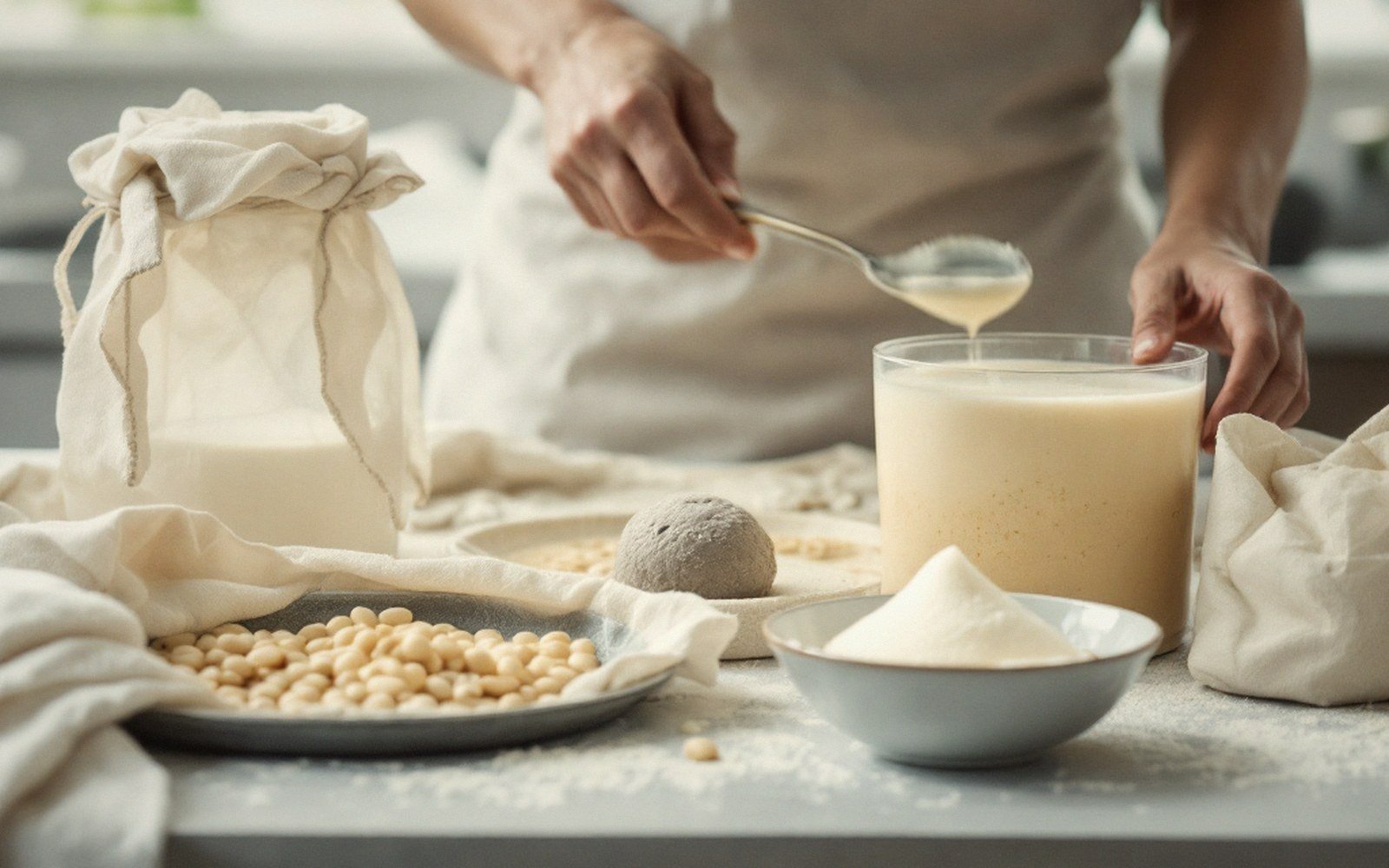
The difference between silken tofu and firm tofu is not ingredient but process. Both begin with the same coagulated soy milk; what diverges is whether that curd is disturbed before it sets.
Silken tofu is set in its final container. Coagulant — typically a slow-release acid like glucono delta-lactone, or a dilute salt solution — is stirred into hot soy milk, and the vessel is sealed or covered before gelling begins. The protein network forms undisturbed, trapping all the whey inside a continuous, custard-like matrix. Nothing is drained. The result is soft, almost quivering, and high in water because the whey is structurally part of the gel rather than pressed out of it.
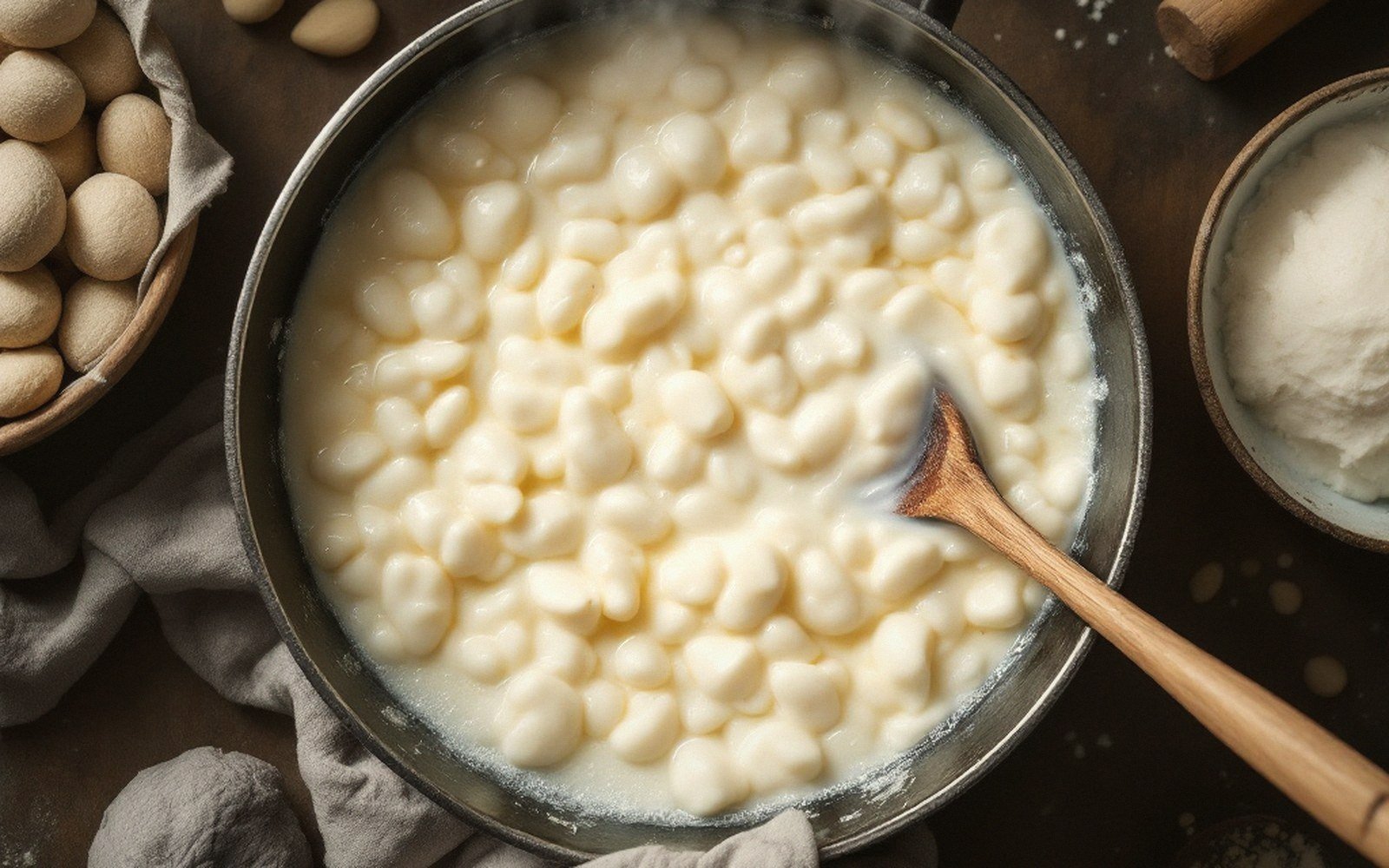
Firm tofu follows a different path. The coagulant is added and the curd is allowed to form, then deliberately broken — ladled or cut into a cloth-lined mould and pressed under weight. Breaking the curd expels whey mechanically; pressing expels more. What remains is a denser, more discontinuous protein network with far less moisture. The texture that results — how much give or resistance — is a direct function of how long and how heavily the curd is pressed.
The same coagulant can produce either outcome. Nigari (magnesium chloride) is fast enough to be used for both, though its rapid set demands careful handling if silken texture is the goal. Gypsum (calcium sulphate) sets more slowly and is more forgiving for silken work. What determines silken or firm is not principally which salt you use but whether the curd network is allowed to set intact or is broken and pressed.
Protein concentration in the soy milk adds a second variable. A richer milk — more soybeans per litre of water — forms a firmer gel at equivalent coagulant levels, because there is more protein available to cross-link. This is why silken tofu made from thinner milk stays delicate even with a complete set, while a concentrated milk pressed firmly can reach a density close to fresh cheese.
Two foods. One mechanism, bent at a single decision point.