
What the liquid tells you
When soy milk coagulates, the proteins cluster into curds and the remaining liquid — the whey — turns clear or pale yellow and drains away. Most cooks discard it. That is a mistake in two senses: practical and diagnostic.
Practically, soy whey still carries soluble sugars, small peptides, and traces of the coagulant used. It can be reduced into a cooking liquid or used to season grains. But its more important role is informational.
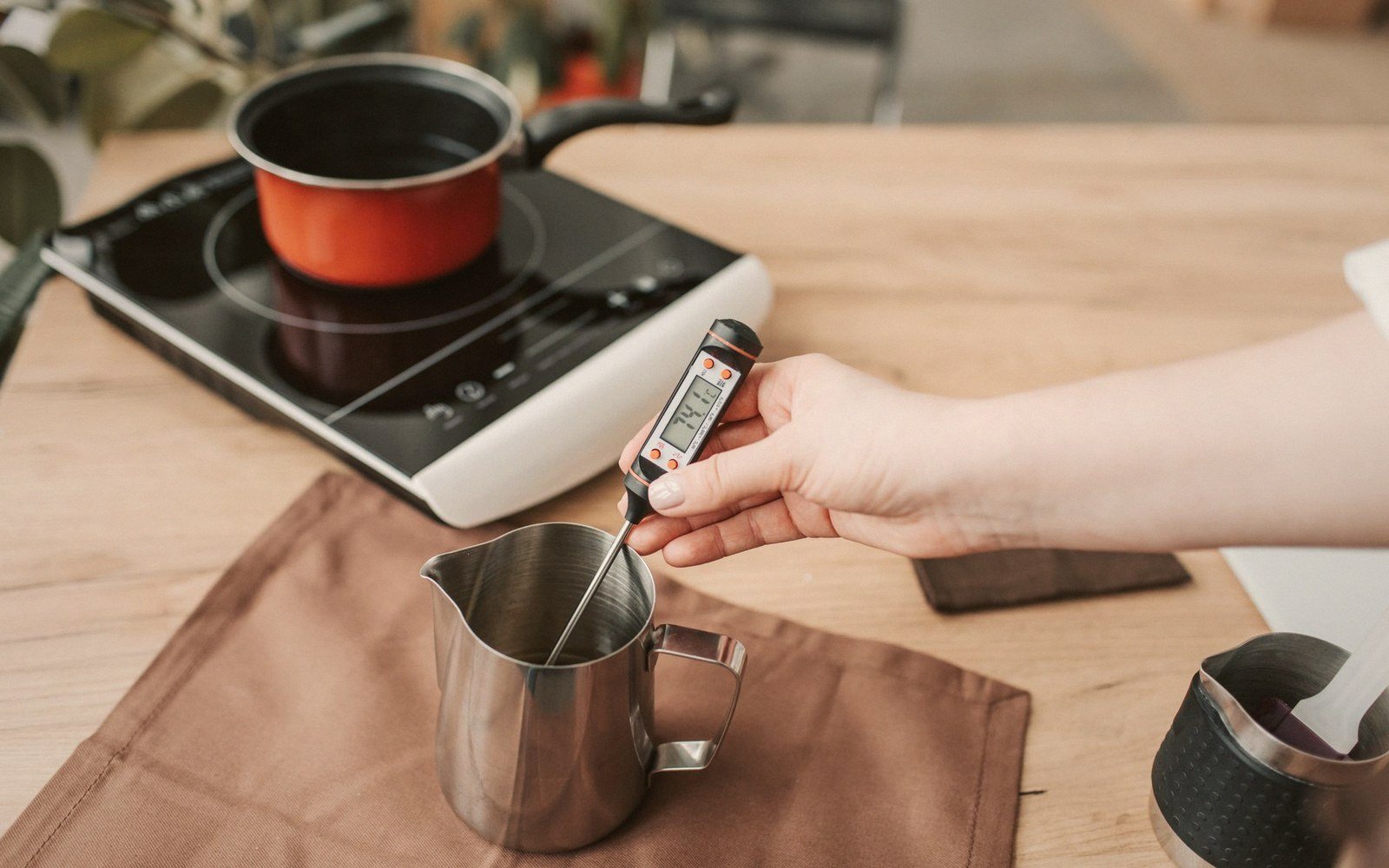
The clarity and colour of the whey tell you whether the setting point was reached correctly. A well-coagulated batch produces whey that is nearly transparent, with a faint greenish-yellow tinge — this comes from riboflavin, which is water-soluble and stays behind. If the whey is still visibly milky, protein has not fully aggregated: the coagulant was too little, added too cool, or stirred in too fast and unevenly. Milky whey means curds will be soft, fragile, or will not hold their shape under pressing.
The opposite failure is a whey that runs clear almost immediately and in large volume. This can indicate that the coagulant was excessive or that the soy milk was too concentrated, causing rapid, tight contraction of the protein network — squeezing out more water than a gentle set would. The curds in this case are dense and potentially rubbery, because the network has tightened before structure had time to organise. Nigari, which works fast, is more prone to this than gypsum, which sets slowly and evenly.
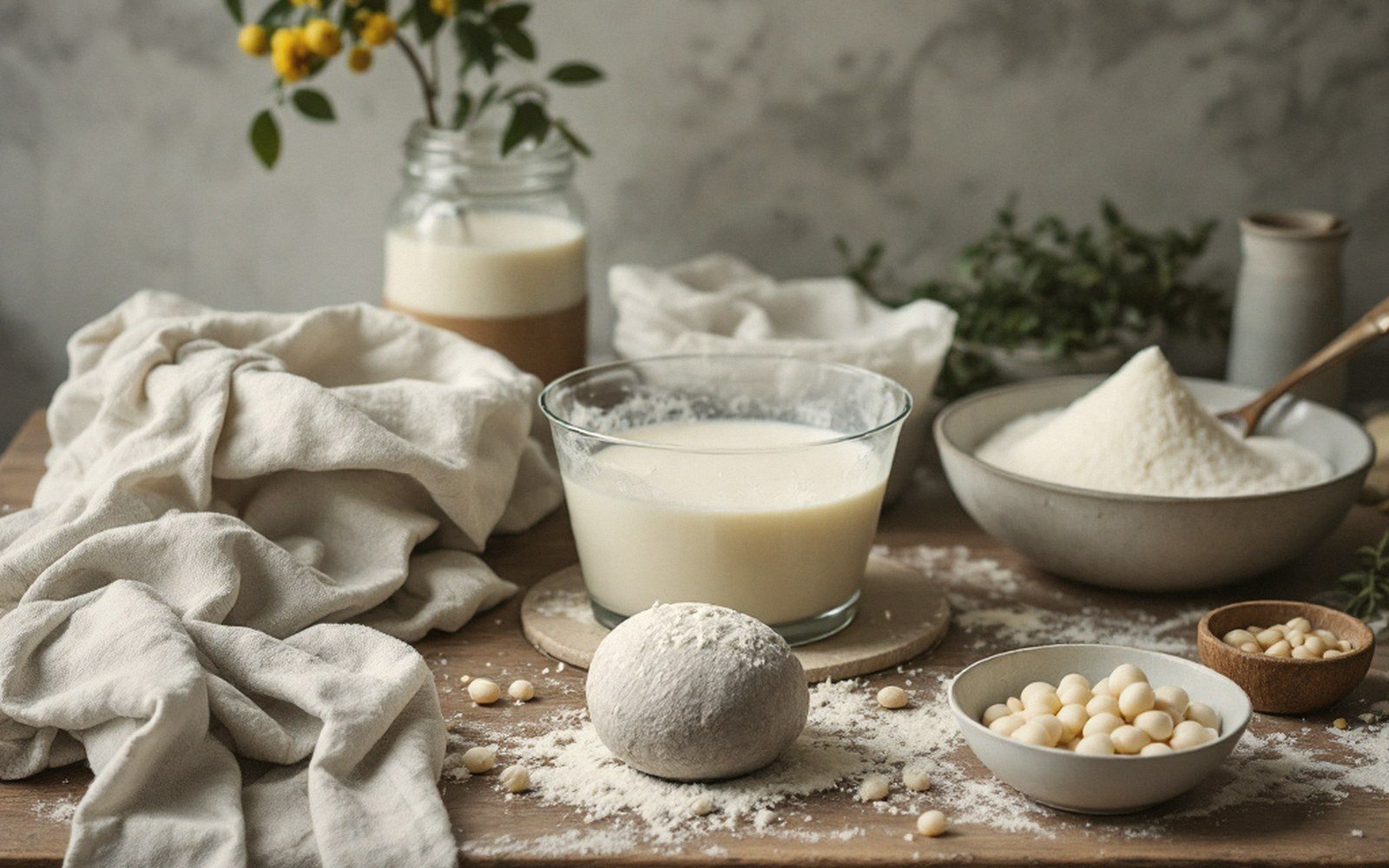
Temperature compounds both effects. Below around 70 °C, most coagulants react poorly and the whey stays cloudy because aggregation is incomplete. Above 90 °C, proteins can denature unevenly and the curd may shatter, releasing excess liquid in a different way — not from over-tightening but from structural collapse.
Volume matters too. A good set from a given quantity of soy milk produces a predictable proportion of whey. Significantly more than expected suggests over-coagulation, with the network squeezing out too much water; significantly less may indicate that the curd is retaining water it will later weep out during pressing.
Read the whey. It has already done the analysis.