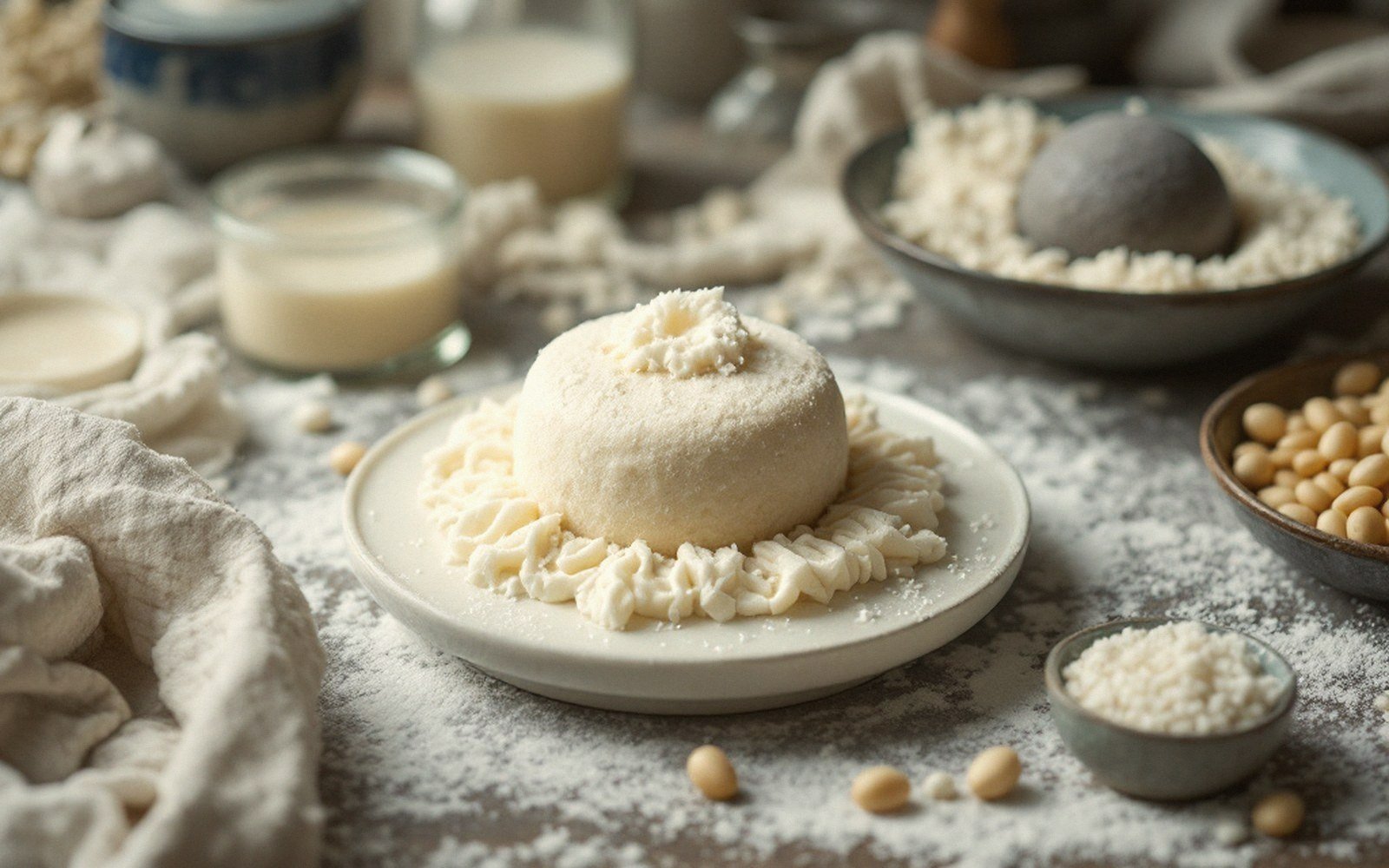
What went wrong, and why sugar was the answer
Weeping — syneresis in the lab, a puddle in the kitchen — happens when the liquid phase separates out of the foam's structure and pools beneath it. In aquafaba, the films that form the bubble walls are under constant stress: surface tension pulls the liquid away from the film and down. Gravity is patient. If the films are not strong enough to hold against that pull, they drain.
Chickpea cooking liquid gets its foam-forming power from two classes of molecule: dissolved proteins, which adsorb at the air-water interface and give the films mechanical strength, and saponins, soap-like compounds that lower surface tension and let bubbles form in the first place. What is actually in it — the ratio between them, and the concentration of both — varies with cooking time and whether the liquid came from a can or a pot. A dilute batch foams fast and weeps fast. A reduced, more concentrated batch holds longer.
Sugar is the main structural fix. Dissolved sucrose raises the viscosity of the aqueous phase, slowing the drainage that causes weeping dramatically. It also dissolves into the film itself, making it denser and more resistant to rupture. The critical detail is timing: sugar added too early, before significant aeration has begun, weighs the liquid down and suppresses foam formation. Sugar added too late — after the foam has already developed its full volume — cannot integrate without collapsing the structure. The window is the stiff-but-not-quite-finished stage, when the peaks hold their shape but the surface still looks slightly wet and glossy. At that point, sugar can be folded or beaten in without destroying what has already formed.
Acid plays a secondary role. A small amount of cream of tartar — tartaric acid salts — lowers the pH slightly and tightens the protein network at the bubble walls, reducing drainage further. It does not compensate for skipping the sugar, but it extends working time.
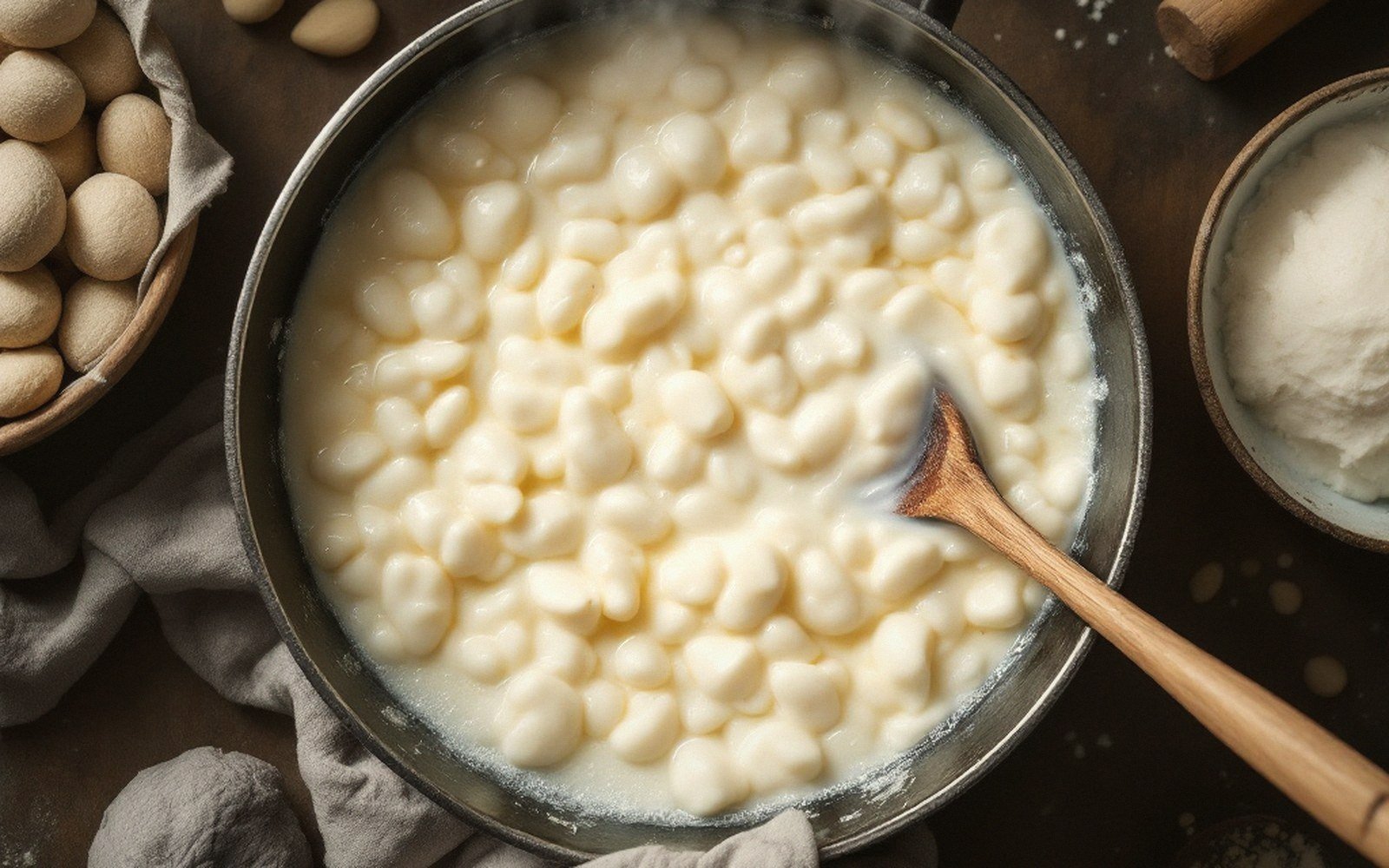
Over-whipping produces a different failure: the films rupture rather than drain, and the foam breaks into a grainy wet mass that cannot be recovered. Weeping, by contrast, is often reversible. A gently re-whipped foam that has only just begun to weep can be rescued, particularly if sugar is added in the second pass. Once the puddle is deep and the volume has visibly collapsed, the window is closed.
Setting Point is an independent publication about food technique. It is not a shop, restaurant or nutrition service.